Review: Víkingur Ólafsson’s Debussy – Rameau

Jean-Philippe Rameau and Claude Debussy were both French.

In my mind, that’s about the only thing they have in common. You’ll soon find out why.

But in Víkingur Ólafsson’s mind, Rameau and Debussy have an intimate connection – despite the almost 200 years between them.

And Ólafsson is one of the hottest new piano virtuosos right now. So his opinion is worth a lot more than mine. Moreover, he enforced it by recording an album that illustrates that connection.
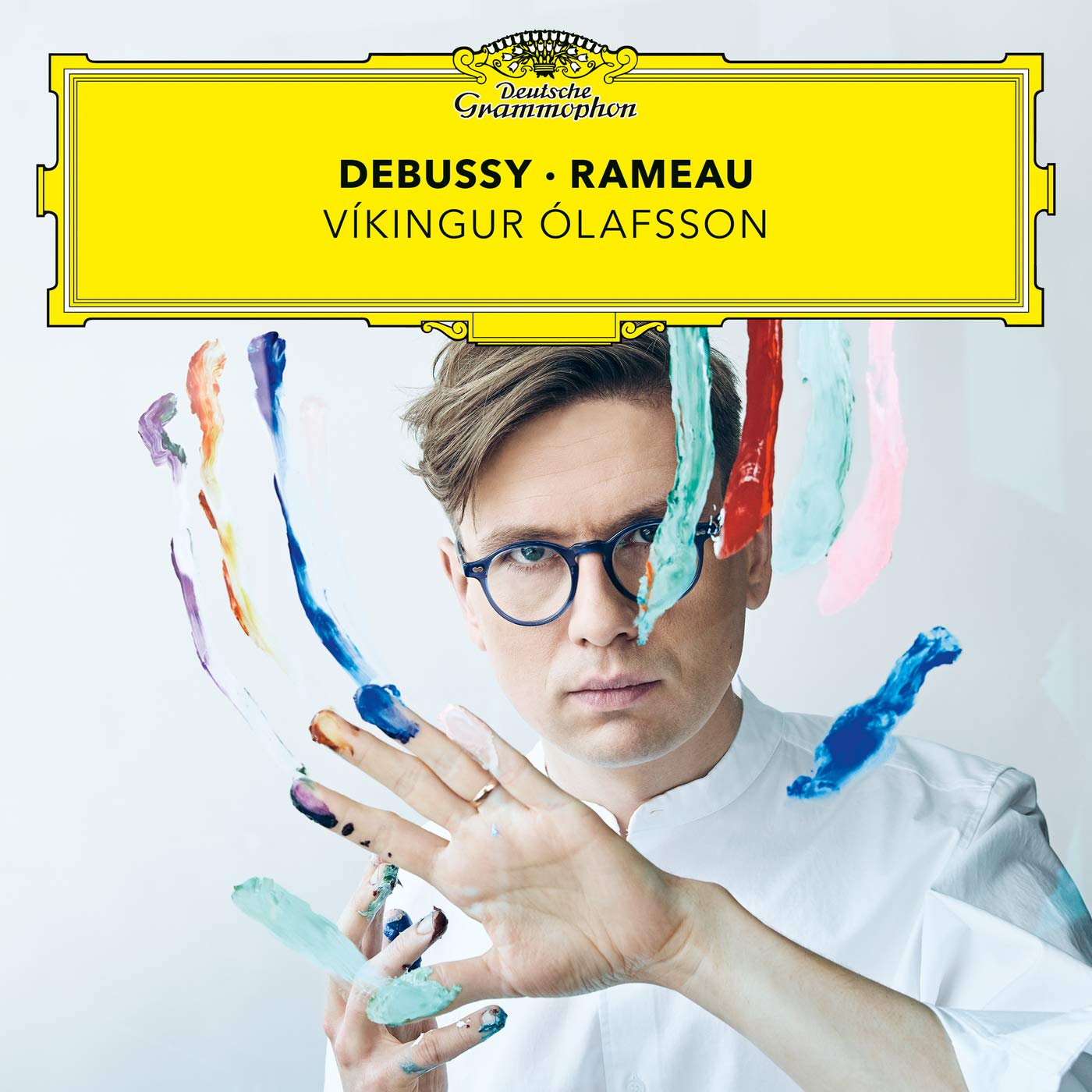
Debussy - Rameau cover

Apart from illustrating that you’re never too old to enjoy finger painting.

Ear-opener

Debussy – Rameau is not the most imaginatively named record of the year. You wouldn’t suspect that this is a ‘concept album’: Ólafsson carefully chose and arranged the tracks so the whole would be greater than the sum of the parts.

There’s an idea that he wants to convey:

“make [Rameau and Debussy] into musical friends and create a dialogue that might show Rameau in a futuristic light, and find Debussy’s deep roots in the French Baroque”

Does he succeed? Certainly, his interpretation of Rameau was an ear-opener to me.

Maybe it’s because I only knew his keyboard works from harpsichord performances.
Maybe because he literally wrote the rule book of tonal harmony.
Maybe because of the schoolmasterish air that exudes from his portraits.

The fact is I never realized how emotional and intense Rameau’s music can be.

Jean-Philippe Rameau

Jolts of pleasure

This intensity of Rameau’s music is exactly what Ólafsson makes clear. Not by adding pathos or making grand gestures. But by charging the music with palpable tension.

From the very first note of every one of these little pieces, you get the feeling that there’s a massive amount of sadness, joy, melancholy, rage … bubbling beneath the surface.

Sometimes it makes a ripple in the neatly woven musical canvas: an ornamental figure drawing attention to itself, an accompanying melody in one of the middle voices making a bold statement.

Thanks to Ólafsson transparent and sensitive style, none of these details go unnoticed. And each one rewards the listener with a little jolt of pleasure.

I like it, is what I’m trying to say. And I understand how this ‘impressionistic’ Rameau would pair well with his compatriote from almost two centuries later.

Even if that’s a connection I don’t feel

Moments of irritation

I can only assume that Ólafsson’s interpretation of Debussy is just as good. Because I’m convinced that the only thing a skilled pianist needs in order to give an adequate Debussy performance is a functioning sustain pedal.

You see, I’m not a big fan of Debussy’s piano music. To put it mildly. From his dull pentatonic melodies to his endless ‘dreamy’ scales up and down the keyboard – they irritate me to no end.

Claude Debussy with a hat

And in what universe is that an acceptable way to wear a hat?

Claude Debussy with hat indoors

Seriously.

There’s only one Debussy track on the album that doesn’t make reach for the skip button: Jardins sous la pluie is a lively piece in the style of a baroque toccata. It fits in perfectly with the Rameau pieces and makes me realize that Ólafsson’s concept works. Even if I can’t fully enjoy it.

Fortunately, on this album, there’s a lot more Rameau to enjoy than Debussy to be irritated by. And if you like them both, you will no doubt be swept away from the first note to the last.

Want to keep up with my classical musings? Enter your email address and click subscribe.

More about baroque music

More about 20th century music

Review: Dag Wirén String Quartets

Apparently, Punxsutawney Phil predicts an early spring this year. That means you only have a few weeks left to enjoy the winter with its perfect soundtrack: the Dag Wirén string quartets by the Wirén Quartet.

Dag Wirén string quartets

Dag Wirén: not a man of words

Never heard of Dag Wirén? Neither did I before this record caught my attention. Some quick facts:

Wirén already stopped composing in 1970, stating: “One should stop in time, while one still has time to stop in time.”

Dag Wirén

Luckily, his music is more memorable than his aphorisms.

Timeless craftmanship

Wirén’s style, especially in his early years, can only be described as neoclassical. To my ears: very neoclassical. Actually, he sounds like Brahms with a pair of warm woolen mittens.

But who cares that he was not hip with the times? Especially if he managed to come up with compositions such as his third string quartet, my favorite one on this record.

Its first movement starts off with a softly rocking accompaniment. Like a flower from under a snow bed, the first violin rises to the surface with the basic melody. Gradually, the other instruments join in to start a fascinating dialogue based on that motif. And just when their disagreement reaches its climax, the conversation abruptly halts and begins anew.

The second, slow movement is a romantic piece based on a pining melody that I’m sure I’ve heard before but can’t quite place. Drop me a note in the comments if you can help me out.

After the short but stirring minuet, the quartet closes with a finale where Wirén waves a tapestry out of the basic melodies of the previous three movements.

None of this would have sounded innovative in 1941. And it sounds even less so today. But the way Wirén develops and combines his musical themes bears witness to a timeless craftmanship that engages your attention while still being easy on the ears. And sometimes that’s all you need during those darkest days of the year.

Pizzicati and … er … stuff

What’s left for a composer after writing a neoclassical masterpiece such as that third string quartet? Judging from his fourth and fifth quartets, also included on this record, Wirén chose to adopt a more modern style. Not Stockhausen or Ligeti modern though, more like Sibelius and Shostakovich modern.

One thing that remains constant is Wirén’s wonderful talent for string arranging. All the quartets are overflowing with plinky plonks and zings and fiiiieuws – or whatever the technical terms may be.

It’s all immaculately performed by the Wirén Quartet. A bit too immaculately, perhaps. I get the feeling that, if they would tone down their reverence towards the composer a bit – he’s in their name after all – and let their own musical personalities shine through, this music would sound even better.

But what do I know? Do make up your own mind by listening to Dag Wirén string quartets by the Wirén Quartet on CD, Spotify or Apple Music. You won’t regret it.

Want to keep up with my classical musings? Enter your email address and click subscribe.

More about 20th century music

Review: Schubert Unfinished by Concentus Musicus Wien

When I’m scanning the new classical album releases, I usually choose works I haven’t heard yet. As there’s still so much beautiful music to discover, why would I be interested in a slightly different version of, let’s say, Beethoven’s fifth?

There are exceptions to that rule. Those are works that I’m obsessed by – you could even say: in love with. I can’t stand the thought of missing out on the tiniest nuance of their character. And that’s exactly what a good new interpretation can reveal.

Coming of age

Schubert’s Unfinished symphony is one of those works. And I must say, the new recording by Concentus Musicus Wien, led by Stefan Gottfried, does not disappoint.

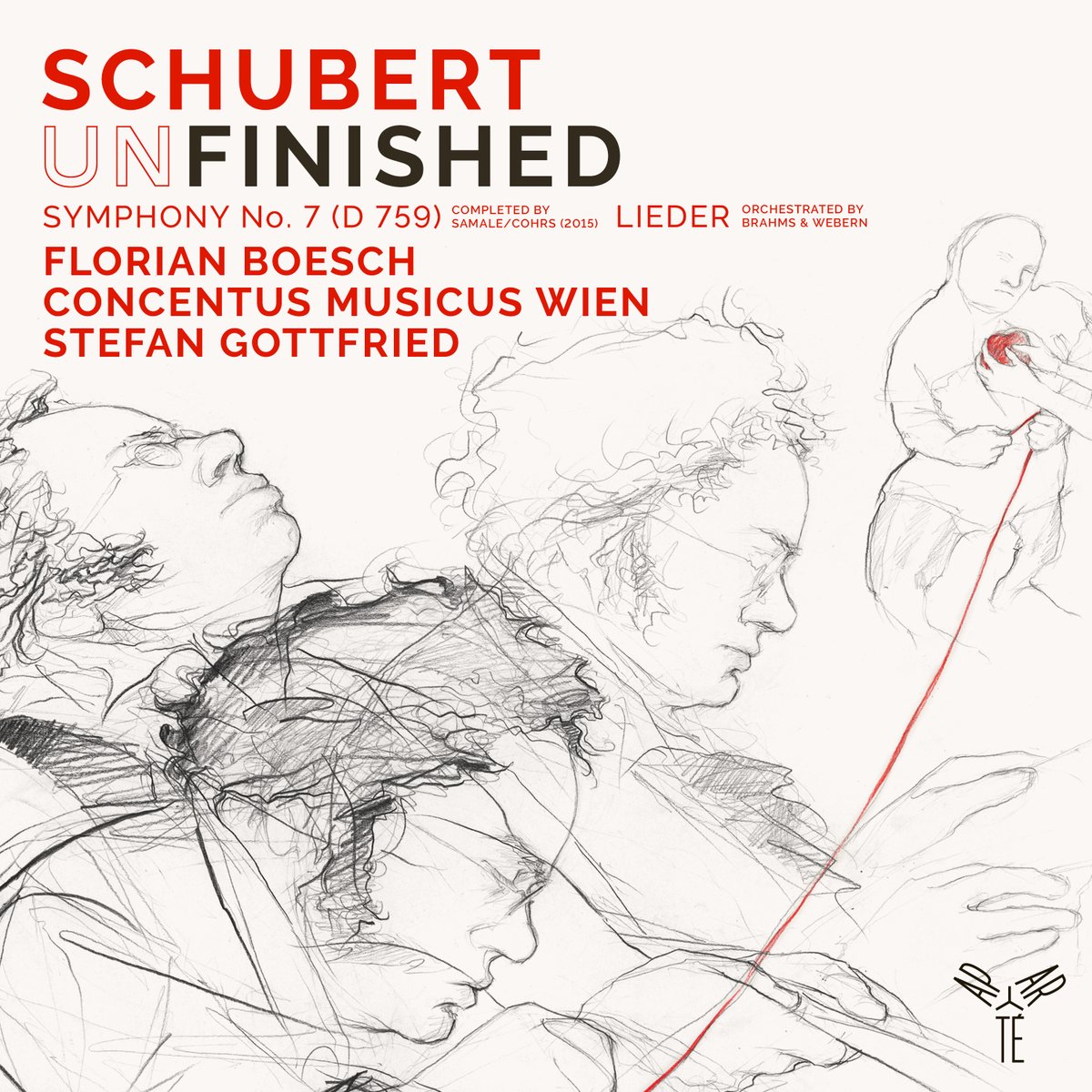
Schubert Unfinished by Concentus Musicus Wien

Funny thing about Schubert’s 8th symphony: when I was first drawn to it as an adolescent, I fell for all the doom and gloom that seem to permeate it – or at least its first two movements. And I still enjoy that all-engulfing weltschmerz. But in smaller doses.

Luckily, performance practice has been so obliging to parallel my coming of age. Recordings of the last few decades have blown away the dust that all those romantic interpretations had strewn on the surface of the Unfinished symphony.

Schubert’s Pastoral

This exceptional recording sounds to me like the high point of that evolution. Gone are the days when the beautiful but heavy tapestry of strings muffled the overall sound of the orchestra. Those strings are now a backdrop to the delicate interplay of the woodwinds and irreverent, even cheeky blaring of the brass section.

To me, it changes the character of the symphony: from the tragic to the pastoral. In fact, the biggest revelation for me was how closely Schubert’s 8th sometimes resembles Beethoven’s 6th.

The slow one fast and the fast one slow

Stefan Gottfried chooses his tempos wisely: the slow movement is relatively fast, the last movement rather slow – almost hesitant. The added bonus is the reduced character contrast between the first two movements (the Unfinished proper) and the final two. Read what that’s all about.

Meanwhile, René Jacobs and B’Rock Orchestra have started their own complete recording of the Schubert symphonies. The first installment certainly sounds promising, but I doubt they’ll be able to top Gottfried’s interpretation of the Unfinished. I’m ready to be surprised, though.

You can listen to the interpretation of Schubert’s Unfinished symphony by Concentus Music Wien on cd, Spotify and Apple Music.

Want to keep up with my classical musings? Enter your email address and click subscribe.

More about music from the romantic period