As every classical music lover must do at least once in their life, I’m attending Wagner’s complete Ring over two years. Because one does not simply walk into a world of gods, giants, dwarfs, dragons, and incestuous relationships, I’ll do my homework before every installment – and share it here. Part 2: Die Walküre.
At the end of Das Rheingold, we say goodbye to Wagner’s mythical world with a view of the gods stately entering Walhalla. In stark contrast, Die Walküre opens with a humble house in the forest. Restless cellos and double basses announce that a storm, and trouble, is brewing.
If you were dying to find out how Wotan, Fafner, or even Alberich were doing, you must be patient. The first character we meet in Die Walküre is no god, giant or dwarf, but a measly man named Siegmund. He’s looking for refuge from his enemies.
Act 1: the Volsung twins
Siegmund is found by Sieglinde, who’s waiting for her abusive husband, Hunding, to come back from the hunt. Taking pity on the stranger, she offers him some water.

Hero or not, Siegmund comes over as a bit of a sourpuss. He won’t say his name but calls himself ‘Woeful’ – a ‘born loser,’ as the kids would say – and entertains Sieglinde with an account of his many misfortunes.
Sieglinde immediately sympathizes with this sadsack. When hubby Hunding enters the house, he’s understandably suspicious. He asks Siegmund about his past, who says he’s a ‘Volsung’ whose mother was killed by ‘Neidings’ who kidnapped his twin sister. Later, he was also separated from his father, Wälse (listen for the Walhalla music in the orchestra for a tip into who this is). Right before he fled to Hunding’s hut, he killed some Neidings in a fight.
Unfortunately, Hunding happens to be a Neiding. Not wanting to be inhospitable, he offers Siegmund a bed for the night. But breakfast will be a round of mortal combat.
After Hunding and Sieglinde go to bed, Siegmund wallows some more in his self-pity. Then, Sieglinde returns to tell him that an old man visited her house a while ago. He buried a sword in a tree, from where only a true hero can extract it. She’s convinced that Siegmund is this hero.
Suddenly, the doors open, revealing a beautiful spring after a harsh winter. Flowers bloom, birds sing, and Siegmund and Sieglinde realize they are brother and sister. Siegmund draws the sword from the tree, they sing a beautiful duet, and have great sex.

Wait, what?!
That’s right: an incestuous relationship is at the heart of Die Walküre and the whole Ring cycle. If you listen closely during this scene, you hear the melody accompanying Alberich’s renunciation of love in scene 1 of Das Rheingold. What we see with Siegmund and Sieglinde is nothing less than the rebirth of love.
Of course, incest is a common ingredient of the old myths and legends that were Wagner’s source material. What’s shocking about Siegmund and Sieglinde is not their incestuous relationship but the way Wagner refuses to condemn it and even revels in it. The end of Act 1 is a precursor to the big finish of Tristan und Isolde: a musical depiction of intercourse – the female orgasm in particular. It’s as if the Lannister twins were the true heroes of Game of Thrones, and we were treated to countless scenes of their explicit yet tender lovemaking.
Act 2: meet Brünnhilde
After this strange and sordid miniature opera, the beginning of Act II feels like stepping onto firmer ground. We hear the Valkyrie theme for the first time in the Ring but for the hundredth-or-so time in our lives.
Moreover, we meet an old acquaintance: Wotan, king of the gods. He’s instructing his daughter Brünnhilde – a Valkyrie whose usual job description is to escort fallen heroes to Walhalla – to assist Siegmund during his upcoming fight with Hunding.
Brünnhilde expresses her gung-ho attitude with a “Hojotoho Heiaha!” Then she makes herself scarce because she sees Fricka approaching in her ram-drawn chariot – and her stepmother is not exactly in a good mood.

As the divine protector of marriage, Fricka is understandably vexed by the brother-and-sister hanky-panky under Hunding’s roof. She condemns Wotan for tolerating this transgression of his own laws. And casually reminds him – not for the first time, one imagines – of his philandering over the years.
Wotan has been a busy boy indeed since Das Rheingold, conceiving:
- The Volsung twins with a mortal woman
- Brünnhilde with Erda, the earth goddess whom we briefly met during Das Rheingold
- The other eight Valkyries with other mortal women
Demanding justice for Hunding (and for herself), Fricka insists that Wotan remove his protection of (his son) Siegmund. In reply, Wotan explains his plan: he sired Siegmund as a man of free will to steal the ring from Fafner before Alberich could get his greedy little hands on it. After all, he can’t do it himself because then he would (again) violate his own laws.
It sounds like a flimsy excuse for tomcatting around, and that’s precisely how Fricka takes it. Moreover, she points to the apparent hole in Wotan’s logic: if he helps Siegmund, the latter is no longer solely acting according to his free will.
Wotan gives in to his wife. When Brünnhilde returns, he orders her not to help Siegmund in his battle with Hunding. He also confides in her by telling her about all that’s happened during and after Das Rheingold. Now that his plan is failing, he bemoans his fate – “Alas, I only sire servants” – and predicts a doomed future for the gods.
Wotan leaves Brünnhilde alone, and then Siegmund and Sieglinde turn up. Sieglinde goes into a lot of unnecessary details on how good the sex with her brother was. At the same time, she’s ashamed because she was ‘tainted’ by Hunding before and is therefore not worthy to sleep with Siegmund.
This might be where you conclude you’re fed up with this nonsense. Every sane person has that feeling at least once during any Wagner opera. But that’s when it typically happens: a moment so heartbreakingly beautiful and simply human that you cannot fathom how it could have been written by the same person who moments ago served you that pseudophilosophical drivel.
I’m talking about the scene popularly known as the ‘Todesverkündigung.’ Brünnhilde informs Siegmund that he won’t survive the battle with Hunding. But this cloud has a silver lining: she will take him to Walhalla, where he will live the life of a prince, meet his father, and enjoy the company of countless ‘wish-maidens.’
All good and well, says Siegmund, but if Sieglinde is not there, I’ll pass.
This simple declaration of love is set to some of the most moving music ever conceived. No need for anvils or other shenanigans to wow the audience here, just some low wind instruments like trombones to paint a solemn and haunting atmosphere.
Then, Siegmund says he’d rather kill his wife than die without her, which is weird again. But it does convince Brünnhilde to defy Wotan’s order.
Now it’s time for the big action scene! When Hunding shows up, the duel ensues. First, Brünnhilde intervenes to help Siegmund, but then it’s time for the true deus ex machina. Wotan shatters Siegmund’s sword, so Hunding can deliver the fatal blow.
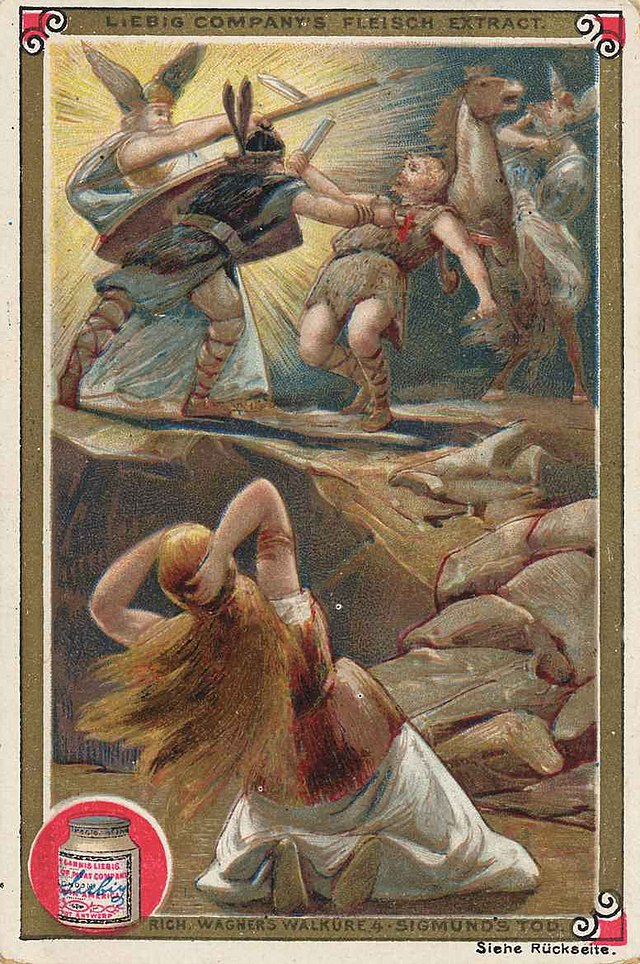
Hunding is not allowed to enjoy his triumph for long. Wotan orders him to tell Fricka the ‘good news,’ strikes him down, and resolves to have his revenge on his disobedient daughter Brünnhilde.
Die Walküre, Wagner and Women
This is how you likely picture Brünnhilde:

It’s a photo of Lillian Nordica, a famous American soprano who, as a suffragette, also used her voice to loudly call for women’s right to vote. It’s a cause that Wagner wouldn’t have approved of. It won’t surprise you that he wasn’t – even by the standards of his time – a feminist.
And yet, as Alex Ross explains in his book Wagnerism, many proponents for women’s rights were inspired by Wagner’s works – and Die Walküre in particular. While the men – Wotan and Siegmund – constantly whine about how powerless they are, the women take action and change the course of events.
Without getting ahead of ourselves too much, it’s undoubtedly Brünnhilde who’s the true hero(ine) of the complete ring cycle. And so it’s only fitting that the most popular installment of the four is named after her. And that she gets the most bitchin’ theme music before Darth Vader.
For now, though, she won’t be rewarded for her bravery.
Act 3: Wotan’s punishment
Is that napalm you smell? Do you hear the helicopters whirring? Yes, the third act opens with the famous Ride of the Valkyries. They come galloping home from their job as battlefield cleaning ladies, taking away the fallen heroes.
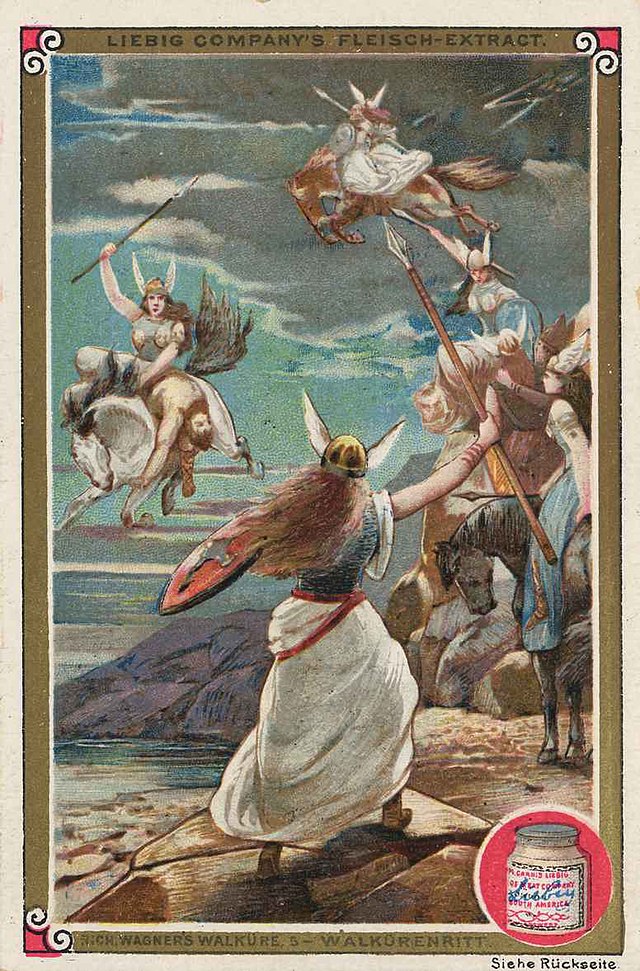
One carries a different cargo: Brünnhilde whisked Sieglinde away from the crime scene and hopes to hide her from Wotan. At first, Sieglinde – in true romantic fashion – insists that she’d rather die than face a future without her brother/lover. But when Brünnhilde informs her that she’s carrying Siegmund’s child, she quickly changes her tune.
Brünnhilde hopes for some sisterly solidarity in the wake of a wrathful Wotan. But Gerhilde, Helmwige, Ortlinde, Waltraute, Rossweise, Siegrune, Grimgerde and Schwertleite go into instant panic mode. Luckily, their exquisite ensemble singing more than makes up for their cowardness.
Brünnhilde tells Sieglinde to flee to the eastern forest where Fafner, now transformed into a dragon, sits on his hoard – and Wotan would not dare to go. She also gives Sieglinde the fragments of Siegmund’s sword. Her child, Siegfried, will one day forge it again.
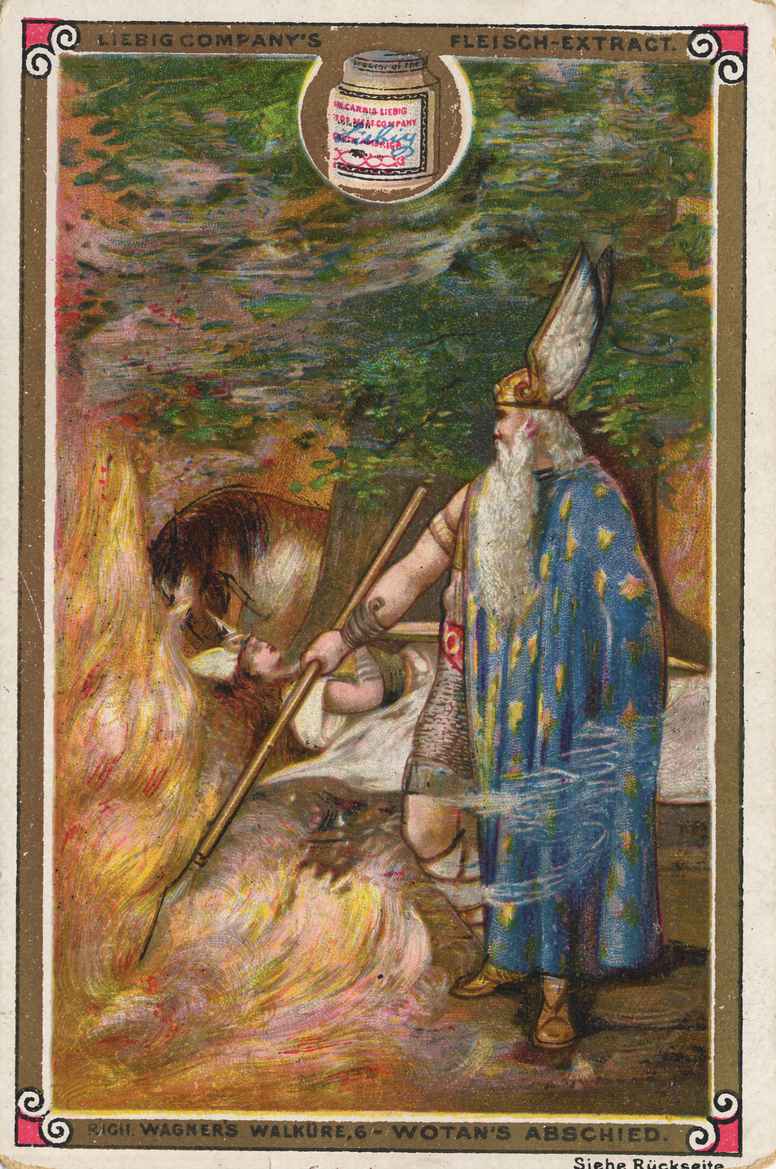
Brünnhilde faces Wotan alone. The disappointed father refuses to listen to her pleas for mercy and comes up with a cruel punishment: she will be put to sleep and at the mercy of the first man who wakes her.
After some more protests by Brünnhilde – “Anything is better than marrying a worthless man” – he agrees to circle her body with a ring of fire. Only a true hero can get to her, and it’s obvious who she has in mind for that role. In true operatic fashion, Wotan says goodbye to Brünnhilde 57 times, calls on Loge to start a nice blaze, and so ends Die Walküre.
 Classical Musings
I really enjoyed this tongue-in-cheek account of Die Walkure, although it really does, more or less, follow the course of events. A few quibbles. I don’t find Sieglinde as ridiculous as you do. In fact, I think she’s heroic in her own right. I couldn’t recall that she spoke about their “great sex,” so I got out the score and you’re right, although the flowery language covers up the details! Almost all the scenes in Walkure are brilliant, and I always find something new. In the Todesverkundigung which, I agree, is a profound literary and musical experience, Wagner marries many different leitmotifs. When Brunnhilde describes the wishmaidens and the delights of Valhalla, Wagner merges the lofty themes with a few thumps (dotted rhythms) depicting the Ride. It’s most noticeable on the words, “…..walten dort hier, Wotan’s tochter…..” Genius. Between Wotan’s farewell and the start of the fire music, the strings play a lush melody — I once heard a lapse in the violin, then I heard the same “lapse” in a recording…….and another recording. I realized it’s not a lapse at all, so I pulled out the score again and, sure enough, there’s a grace note in one measure that subtly depicts Wotan’s broken heart. I’ve seen Walkure onstage many (too many?) times (New York, San Francisco, Naples Italy, Rotterdam, and coming up, Vienna). Bayreuth? No, that’s a bridge too far for me — I can’t sit in a theater where Hitler, his cronies, and the SS enjoyed their summer festivities.
LikeLiked by 1 person