Who first created classical music? Ask ChatGPT, and you’ll get a correct but boring answer. Something about classical music having “a rich and diverse history, shaped by numerous composers and musical developments.” Big snore.

Beethoven and AI: the battle of the superhumans
Ask Google, and the answer will be decisive but wrong.

The equally entertaining and correct answer is Joseph Haydn (1732-1809). Here are four reasons why.
1. He had an actual classical music lab
Many world-changing inventions, from penicillin to Keanu Reeves, originated in a laboratory. Classical music is no exception.
In 1761, then barely 30 years old, Joseph Haydn entered into the service of Prince Esterházy. He would remain there more or less until the end of his life.
Fans of the ‘free artistic spirits’ of the following generations (Mozart, Beethoven, and so on) often look down on Haydn for his position as a mere servant – with a livery and all. And they’re right that Haydn wasn’t free to follow his muse. He had to cater to the whims of his master, such as writing 175 pieces for an obscure instrument that the count happened to like.
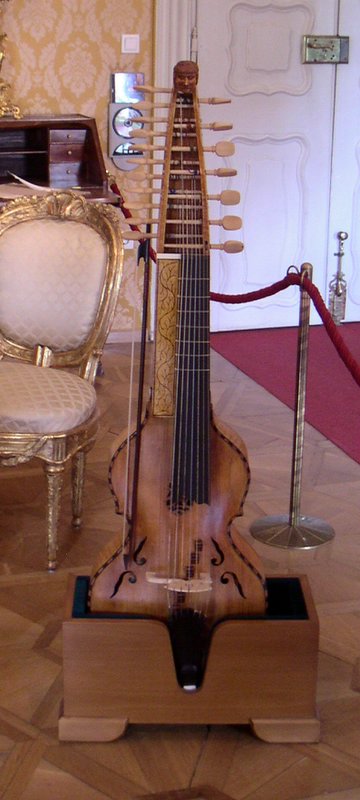
On top of that, poor Haydn didn’t live in the bustling musical metropolis of Vienna. He spent most of his days in a remote palace erected on top of a mosquito-infested swamp. How was he supposed to keep up with the latest trends?
He didn’t. And his music benefited from it. Or as Haydn himself said in this famous quote:
“I was cut off from the world. There was no one to confuse or torment me, and I was forced to become original.”
In other words – more Doc Brown than Steve Jobs – Haydn preferred tinkering around in his basement above hobnobbing with the musical jet set and stealing their ideas.
It helped that this proverbial basement was excellently equipped. Haydn had one of Europe’s finest orchestras at his disposal for performances and rehearsals. He could test what worked and what didn’t, make changes, and try again. It was a musical test lab that folks like Mozart and Beethoven could only dream of. And it certainly makes you wonder who enjoyed the most artistic freedom.
2. He (sort of) invented the classical style
Haydn is often called the ‘father’ of the symphony and the string quartet. Admittedly, that’s a bit of an overstatement. He obviously wasn’t the first to write a large piece for an orchestra or to come up with the idea of combining two violins, a viola, and a cello.
More to the point, he used these two genres to explore new ways of composing. And that’s where things get a little bit technical, I’m afraid.

Listen to music by Baroque composers like Bach and Handel, and you’ll find that a single piece of music usually explores one emotion: sad, triumphant, melancholy, and so on. Sometimes two, such as in the ubiquitous Da Capo arias with a contrasting middle section, but that’s about it.
The following generation of composers wanted to combine multiple emotions in one piece. So you quickly go from sad, to angry, to resigned, to happy. The trick is to do this without the whole thing sounding like a toddler with mood swings.
That’s what Haydn mastered through the dozens of symphonies and string quartets that poured out of his musical lab. He found a way to build musical structures that combined a variety of emotions with a sense of balance and logic.
Haydn wasn’t the only one to do that, but he was the best. Without his innovations, Mozart wouldn’t have written his famous operatic finales, nor Beethoven his dramatic symphonies. In this respect, Haydn can truly be considered the inventor of classical music.
Admittedly, this is only true for what late nineteenth-century critics labelled the ‘Viennese classical school’ around Haydn, Mozart, and Beethoven. Not for what we now call classical music, which is everything from Gregorian chant to Ludovico Einaudi.
Nevertheless, it’s no coincidence that this ‘classical’ label first awarded to Haydn gradually stuck to ‘all music that aspires to do more than divert’. Or ‘all music that’s worth to be remembered’. And this brings us to his other great innovation.
3. He invented the classical music ‘masterwork’ culture
Although Haydn stayed in one place for most of his life, his music travelled to all corners of Europe. Unauthorized prints of his scores were in high demand. Soon, the ‘brand’ Haydn was tacked to other people’s works to jack up sales.
You could write an entire article about how the business-savvy Haydn gradually took matters into his own hands. Through hard bargaining with publishers – and some downright fraud – he managed to slice out a nice piece of the pie for himself. In a time, remember, when there was no such thing as copyright.
But for the history of classical music, what happened at the end of his life is more interesting. First, take a look at this graph:

That giant bar is Haydn’s musical output during his lifetime. Others don’t come near, and after his death, productivity evidently declined.
Did those young upstarts lack Papa Haydn’s work ethic?
Actually, they followed in his footsteps.
There’s a whole story behind that giant bar. While Haydn wrote a ton of music – 106 symphonies alone – he wrote considerably less during his later years. Because he was tired? Perhaps. But also, because the new Prince Esterházy didn’t ask for as many compositions, while still paying him a generous allowance.
Instead, Haydn started to value quality over quantity.
Wait, that might imply that his former work was bad.
A better way to put it, is that he became more ambitious. Like the rock bands back in the day that started to churn out concept albums once they were rich, bored, or both.
In his later works, including The creation and the Mass in time of war, Haydn is no longer trying to please his master or cater to the whims of the market, he’s writing for posterity.
Happily, this long-term goal didn’t hurt his short-term cash flow. It turned out people were prepared to dig a little deeper in their pockets for such ‘masterworks’. The earnings for The creation started rolling in before the work was even printed, because Haydn used a subscription model where supporters paid in advance for copies of the score. That’s right, he also invented crowdfunding.

At the same time, people were using the Saint Matthew passion manuscripts to wrap fish ‘n chips, The creation was the first composition that was deemed of ‘eternal value’. It immediately popped up on all concert programs and stayed there forever. It was the first entry of what we now call – for better or worse – the standard repertoire.
4. He doesn’t get the recognition he deserves
Joseph Swan invented the light bulb, John Blankenbaker the personal computer. Yet it’s Thomas Edison and Steve Jobs who ended up in the history books. Uncredited pioneers are everywhere.
Haydn isn’t exactly forgotten, of course. But he’s also not in the superstar league of Bach, Mozart, Beethoven, or Chopin. Do you, doubtlessly a classical music connoisseur, disagree with that assessment? Then please whistle a Haydn tune for me.
Now.
I’ll wait.
If you finally came up with the andante of the surprise symphony – congratulations. Also, how predictable.
That famous andante is a good example of why Haydn gets more respect than love. Let’s be honest: the melody is incredibly bland and silly. Compared to the countless Mozart melodies you know by heart, it sounds uninspired. And (divine) inspiration is what we expect from an artistic genius – like Paul McCartney waking up with the tune of Yesterday fully formed in his head.
In some ways, Haydn was more an artisan than an artist. His main drive was to systematically explore the possibilities of music – almost in the scientific spirit of enlightenment. Trivial melodies are actually better suited for that purpose, as they offer a lot more opportunities for development.
Beethoven also knew that. You can’t say that the opening theme of the fifth symphony, for example, is a great find. We cherish it because we know what comes after those 4 notes. What sets Beethoven apart, is that he used these techniques to write pieces of music with an incredible emotional drive. And that, alas, is what’s often missing from Haydn. His music is often a lot more interesting than moving.
Is Haydn still worth listening to?
Has this article convinced you of Haydn’s historic importance but also weary of listening to his music? You’re not alone. And that’s a pity, because there’s a formidable oeuvre waiting for you to – trust me – enjoy. Here are some tips for appreciating Haydn:
Start with works from his middle period
Haydn was very much into Sturm und Drang, an artistic emo movement that was fashionable during the 1760/70s. Many of the works he wrote then are a lot more passionate than his later compositions, and therefore easier on the modern ear.
Examples are symphonies such as the Trauer (no. 44), Farewell (no. 45), and La passione (no. 49); and the six string quartets opus 20 (a big influence on Beethoven).
After that, learn to take pleasure in being amused rather than moved
Haydn is often called the master of humor in music. Unfortunately, that makes him sound like some silly prankster uncle.
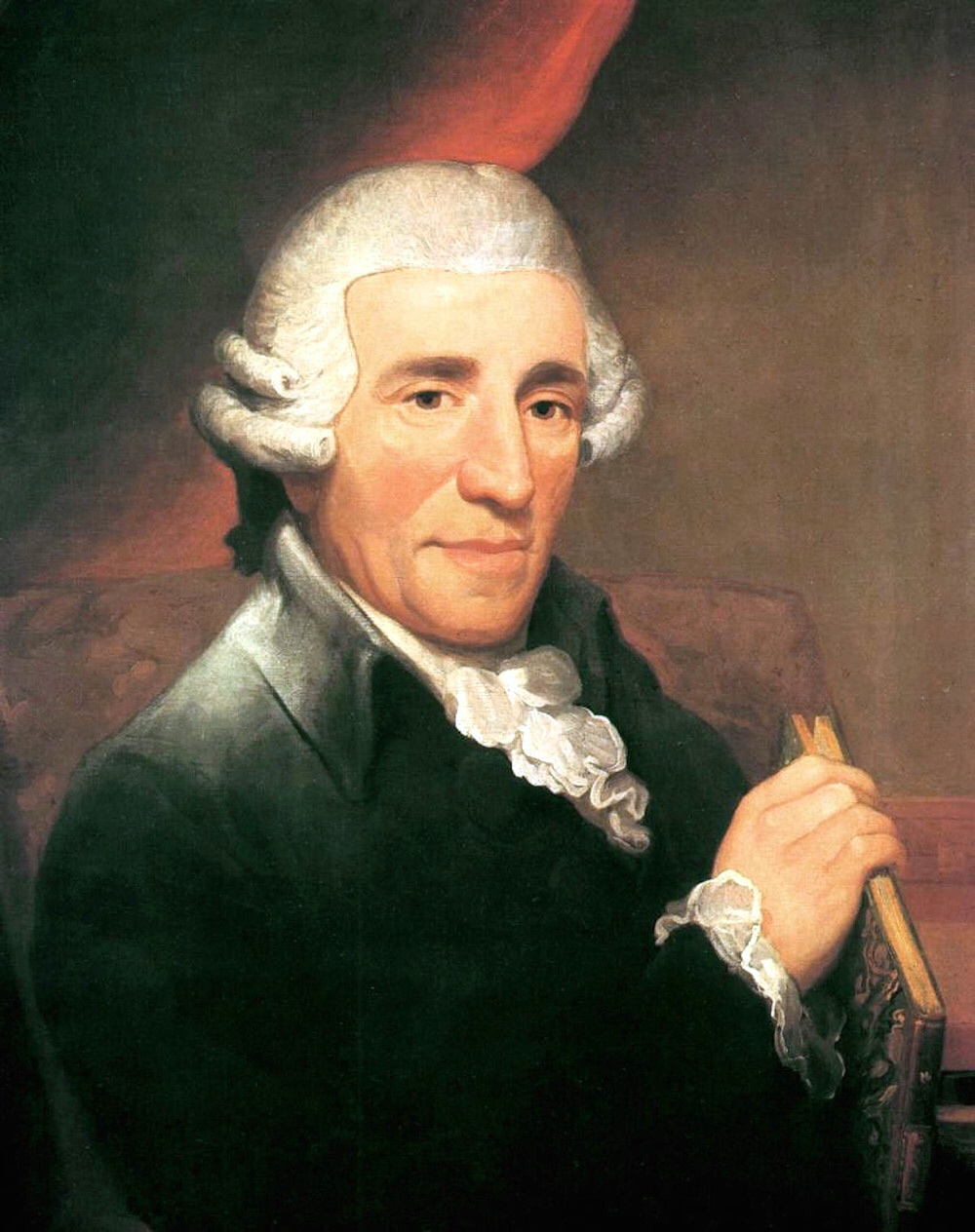
But the ‘humor’ in his most mature instrumental works is a lot more sophisticated than the insertion of ‘practical jokes’ like the loud surprise chord in the aforementioned andante. It’s about constantly thwarting your expectations, playing with the conventions that he helped to establish, essentially parodying himself.
Because this is music that actively refuses to ‘pull you in’, it requires a different listening attitude compared to Mozart or Beethoven. You can’t disappear into it; you have to enter into a conversation with it. Even though your part of the discussion will mostly be: “I see what you did there, ol’ chap. Well done!”
Put The creation on your lifelong playlist
Just like J.S. Bach, Haydn was a devout man. His most ‘personal’ music is not about his internal struggles, but about his relationship with God.
But while Bach was a somewhat creepy and antisemitic fundamentalist, Haydn had a more tolerant and optimistic view of religion, and of life. One that illuminates every note in his magnum opus: The creation.
The creation, based on the book of Genesis and Milton’s Paradise lost, is an incomparable celebration of God through the evocation of the beauty of nature and of human love. Its music depicts the cosmological transformation from chaos to order, the separation of heaven and earth, the first sunrise, roaring lions and buzzing insects.
In the hands of a lesser composer, this would sound like sequence of cheap sound effects. But thanks to Haydn’s musical innovations, it all amounts to a coherent whole.
In The creation, there’s no room for doom and damnation. Early on, ‘hellish spirits’ are quickly thrown into the abyss, never to be heard again. Magnificent choirs, inspired by the Handel performances that Haydn heard during his trips to London, beam their joyous and hopeful messages into the world.
Haydn intended for the creation to be his eternal message to the humanity. Paradoxically, no other work is so steeped in the optimism of the Enlightenment. That optimism proved to be less timeless (and warranted) than he had hoped. But it should never completely disappear from view. And neither should classical music’s greatest inventor.
 Classical Musings
Is Haydn really not in the superstar league? I suppose I had never really consciously considered the matter but I think I always assumed he was ‘up there’. There’s certainly plenty of his work in my CD collection.
A nice argument in his favour, by the by.
LikeLike