Are these the best classical tracks of 2024?

Probably not. But out of the ones I’ve heard, I’ve enjoyed these the most.

Listen to the Spotify playlist

10. Te Deum: Prélude (Marc-Antoine Charpentier)
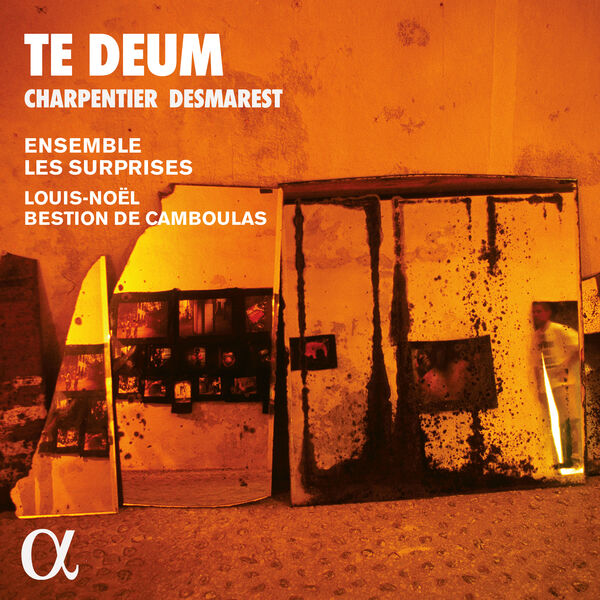
Te Deum Charpentier

Featured on: Charpentier & Desmarest: Te Deum (Ensemble Les Surprises)

I considered choosing a less obvious track from this album, but let’s be honest, there’s a reason why this is such an evergreen. That rambunctious opening drumroll followed by those cock-a-hoop trumpets—there aren’t enough words in my thesaurus to describe my exhilaration whenever I hear this.

Nevertheless, I can heartily recommend the rest of the album as well. This recording shines from all angles like a Versailles chandelier. And then there’s the way the singers, doubtlessly for historical accuracy, Frenchify the Latin. So the ‘u’ in ‘laudamus’ doesn’t sound like ‘boot’ but like—well—‘parvenu’ (pronounced in French). Which, for some reason, I find endlessly entertaining.

9. Funeral March for Rikard Nordraak (Edvard Grieg)

Funeral March Richard Nordraak Grieg

Featured on: Grieg: Symphonic Dances (Bergen Philharmonic Orchestra, Edward Gardner)

On to more drums and winds, but less jolliness. This funeral march was written by a young Edvard Grieg to honor his friend and mentor Richard Nordraak, the composer of the Norwegian national anthem who died aged 23 of tuberculosis.

As dictated by convention, this march is a mixture of pomposity, tenderness, and grief. Although you might also detect a pang of guilt. After all, Grieg had ignored his sick friend’s incessant pleadings for a visit out of fear of catching the disease himself.

Towards the end of his life, Grieg always kept a copy of this score in his briefcase, in case there was need for some impromptu serenading when he suddenly dropped dead. It was played at his funeral in the end. If you want it to accompany your own interment, this recording by the Bergen Philharmonic Orchestra will not disappoint.

8. Finale, Presto from Symphony nr. 98 (Joseph Haydn)

Haydn symphony 98

Featured on: Haydn 2032, Vol. 16: The Surprise (Il Giardino Armonico, Kammerorchester Basel, Giovanni Antonini)

I elaborately sang the praises of Haydn this year. So it makes sense to include some of his music in 2024’s overview. And the Haydn 2032 series is so good that I can include it in every year’s list.

This allegro is a perfect illustration of Haydn’s unique approach to composition. It starts with a lighthearted and, dare I say, forgettable melody. But then it branches out to all corners of the emotional spectrum.

The final surprise is a short but lively keyboard solo just when you thought the movement was grinding to a halt. At the premiere in London, this was played by the 60-year-old Haydn himself—never particularly known as a virtuoso. Imagine Bob Dylan suddenly turning into Billy Joel at the piano, and you’ll understand why the baffled crowd immediately demanded an encore.

7. A Ballet Through Mud (RZA)
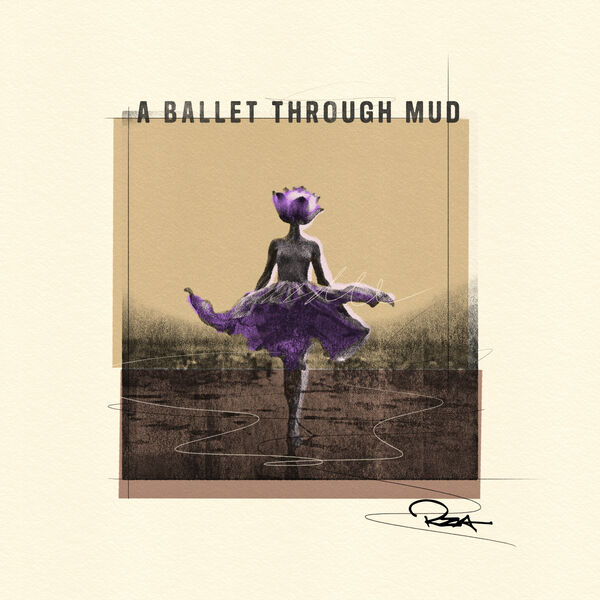
A ballet through mud

Featured on: A Ballet Through Mud (Colorado Symphony)

Speaking of surprises, when I first heard this track in the background, my first guess was Rimsky-Korsakov—mainly because of the obvious quotation from Scheherazade. Turned out the composer was RZA, aka Robert Fitzgerald Diggs, of Wu-Tang Clan fame.

RZA is quite the renaissance man: rapper, filmmaker, actor, composer, and producer. It’s the producer job that brings in the C.R.E.A.M, though. So it’s no surprise that this album, apart from some beautiful melodies, stands out for its amazing orchestration.

6. At the Purchaser’s Option (Rhiannon Giddens)

At the purchaser's option

Featured on: But Not My Soul: Price, Dvořák & Giddens (Ragazze Quartet)

Rarely is there such a heartbreaking story behind an innocuous title. Listen to Rhiannon Giddens tell it and stick around for her mesmerizing performance:

This original version gets its emotional punch from the combination of the laid-back banjo music with Giddens’ dignified and controlled anger.

The string quartet arrangement by Jacob Garchik is more extroverted, releasing all the pain and rage through plaintive countermelodies, plucking on snares, and hammering on wood. No substitute for the original, but certainly a worthy complement.

5. Tuba Mirum (Wolfgang Amadeus Mozart)

Tuba mirum mozart

Featured on: Mozart: Requiem (Pygmalion, Raphaël Pichon)

This one will be on a lot of lists this year. Raphaël Pichon interweaves Mozart’s Requiem with lesser-known compositions by the composer that seem to eerily foreshadow his final work. Certainly interesting, but it’s the amazing performance of the pièce de résistance that will turn this into a classic recording.

In the liner notes, Pichon explains how Mozart’s Requiem is in some ways an extension of his operas, “[elevating] the orchestra to the status of an additional character, [even] the most complex character to convey what could not be expressed in words.”

That’s nowhere more evident than in the Tuba Mirum, an almost operatic quartet with a trombone as the fifth character. But Pichon also brings out the dramatic power of Mozart’s (or is it Süssmayr’s?) string section as a sixth member of the conversation.

4. Strike the viol (Jakub Józef Orliński/Henry Purcell)
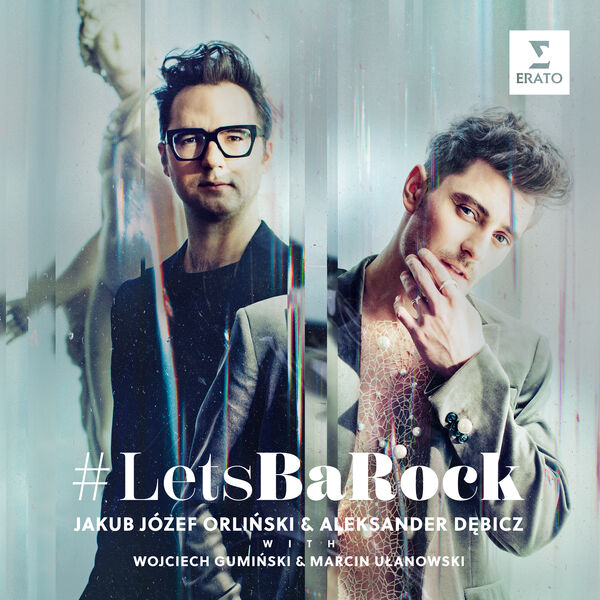
Strike the viol

Featured on: #LetsBaRock (Jakub Józef Orliński, Aleksander Debicz)

Let me get one thing off my chest first.

Dear classical music marketing people, I know pop-classical crossover is hard to sell. But let me assure you that album titles such as these only make things worse. It sounds like something that was coined in the seventies.
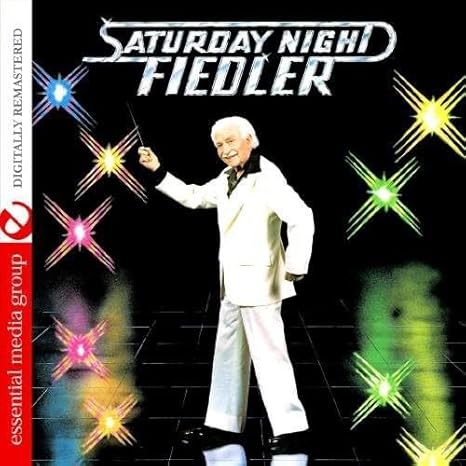
Saturday Night Fiedler
Good times, but not to be revived.

But wait a minute, I retract my words. I see you’ve added a contemporary touch: the completely meaningless hashtag! An unmistakable sign that you are truly ‘with it’.

Why should I care? Because this is a great album, and it would be a pity if the already tiny potential audience for this sort of thing was put off by this horrible title.

Countertenor Orliński and pianist Debicz bring cover versions of lesser-known baroque tunes and some of their own compositions in various 20th and 21st-century musical garments—ranging from jazz to hip-hop.

The combination of rich stylistic variety and consistent bare-boned instrumentation (mostly just voice, piano, drums, and bass) works extremely well. Just play this track, repress your purist prejudices (in either direction). And admit that it just, well, rocks.

3. Piano Quintet in G Minor: Largo (Sergey Taneyev)

Sergey Taneyev

Featured on: Taneyev: Violin Sonata in A Minor & Piano Quintet in G Minor, Op. 30 (Spectrum Concerts Berlin)

“Unfortunately for Sergei Taneyev, his music has long been held in high respect.” Nothing can be improved about that introduction by Gavin Dixon to this relatively unknown Russian composer. As a pupil of Tchaikovsky and teacher of Scriabin and Rachmaninov, Taneyev is a key figure in the history of Russian music. But he himself was more attracted to the Germanic tradition, earning him the nickname of ‘Russian Brahms’.
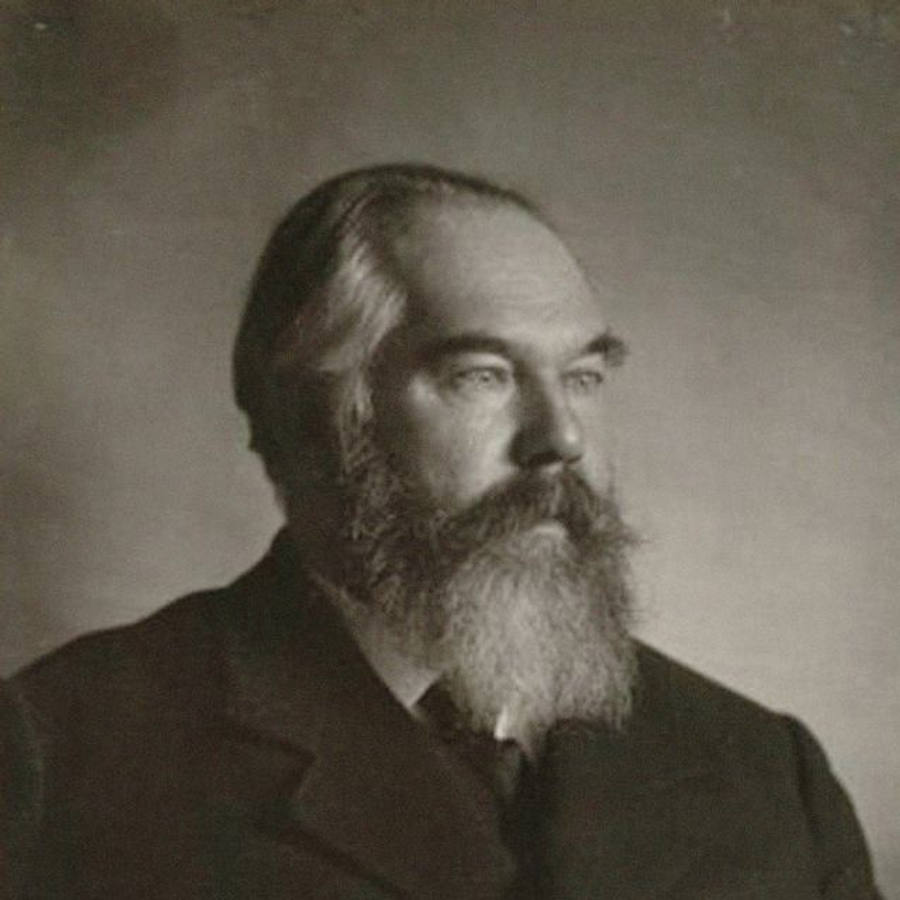
Much like Brahms, Taneyev combines strict compositional procedures with soaring expressions of emotion. This largo from his piano quintet is a nice example. It’s written in the respectable baroque form of a passacaglia, where one melody (presented very dramatically in unison at the beginning) is repeated throughout the movement. It’s a strong anchor for a deep dive into the innermost depths of the human soul—classical romanticism at its best.

This passionate aspect of Taneyev’s music seems to be overshadowed by his reputation as an academic traditionalist. His uneventful personal life might also have something to do with it. A lifelong bachelor, the closest he came to scandal was when Tolstoy’s wife took a shine to him. She wasn’t particularly subtle about it, which enraged Tolstoy. Nevertheless, the whole thing completely passed by Taneyev’s notice.

Maybe all that emotional torment in his music had no basis in real life. Or maybe his ‘lifelong friendship’ with Tchaikovsky was more complicated than most bios would have us believe. In that case, I hope someone discreetly informed poor Mrs. Tolstoy.

2. Piano Concerto in C-sharp Minor: Allegretto (Francis Poulenc)
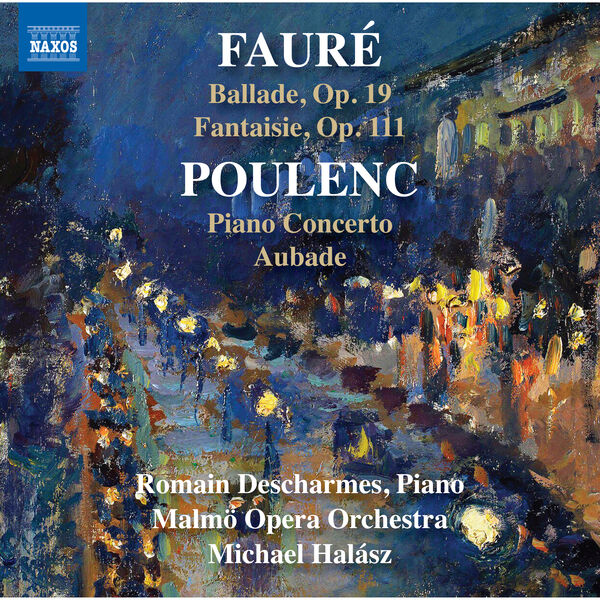
Poulenc piano concerto

Featured on: Fauré & Poulenc: Works for Piano & Orchestra (Romain Descharmes, Malmö Opera Orchestra, Michael Halász)

“Half monk and half naughty boy.” Now that’s more like it. It’s how critic Claude Rostand described Francis Poulenc, a composer who’s often derided for not being sufficiently serious. Understandable, when you listen to this first movement of his piano concerto, where he even outdoes Haydn in his constant thwarting of our expectations.

Maybe it’s a bit much and the whole thing misses a sense of unity. But his gorgeous melodies are unsurpassed by anyone but Mozart or Schubert. I couldn’t get the main theme out of my head for at least a week.

And then there’s that solemn brass chorale around the 6-minute mark, dialoguing with the piano and strings. Poulenc lets the seductive main theme kick in again with scarcely any transition, bringing the monk and the naughty boy face to face and creating a moment of sublime beauty.

1. Violin Concerto, Op. 15: II and III (Benjamin Britten)

Violin concerto Benjamin Britten

Featured on: Britten: Violin Concerto, Chamber Works (Isabelle Faust, Symphonieorchester Des Bayerischen Rundfunks)

In 1939, Benjamin Britten arrived in the United States seeking refuge from the rise of fascism and militarism in Europe. His subsequently written violin concerto is therefore often regarded as a commentary on those troubled times.

Some say the young Britten went a little overboard with this concerto. The orchestra (especially the percussion section) is unusually large, and the violin part extremely demanding. It’s hard to imagine how some of the parts of the cadenza at the end of Part II can be played without at least one extra hand.

It’s impossible to separate these two movements: there’s no break between them and the theme of the passacaglia of Part III (a simple rising and then descending scale) is foreshadowed in Part II.

The general mood of Part II is one of terrible, beautiful violence (something that can only exist in art), reminiscent of Beethoven’s Ninth Symphony. There’s no triumph in Part III though, only resignation without acceptance.

It’s easy to imagine Britten writing this in 2024. But where would he escape to?
Are these the best classical tracks of 2023?

Probably not. But out of the ones I’ve heard, I’ve enjoyed these the most.

Listen to the Spotify playlist

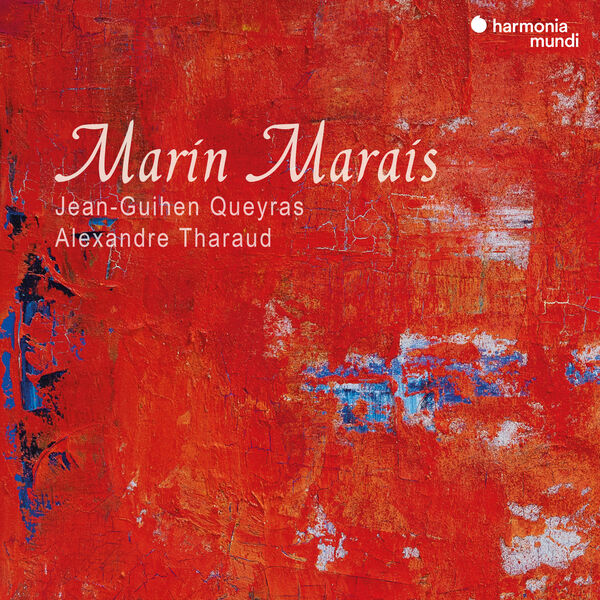
10. Le tableau de l’opération de la taille (Marin Marais)

Marin Marais alb

Featured on: Marin Marais: Folies d’Espagne, La Rêveuse & other works (Jean-Guihen Queyras & Alexandre Tharaud)

Admittedly, this first entry is something of a ‘novelty song.’ It’s included on a record that has a lot more beauty to offer. Jean-Guihen Queyras & Alexandre Tharaud interpret viola da gamba pieces by Marin Marais (1656 – 1728) for cello and piano, with stunning results. You should check it out in full.

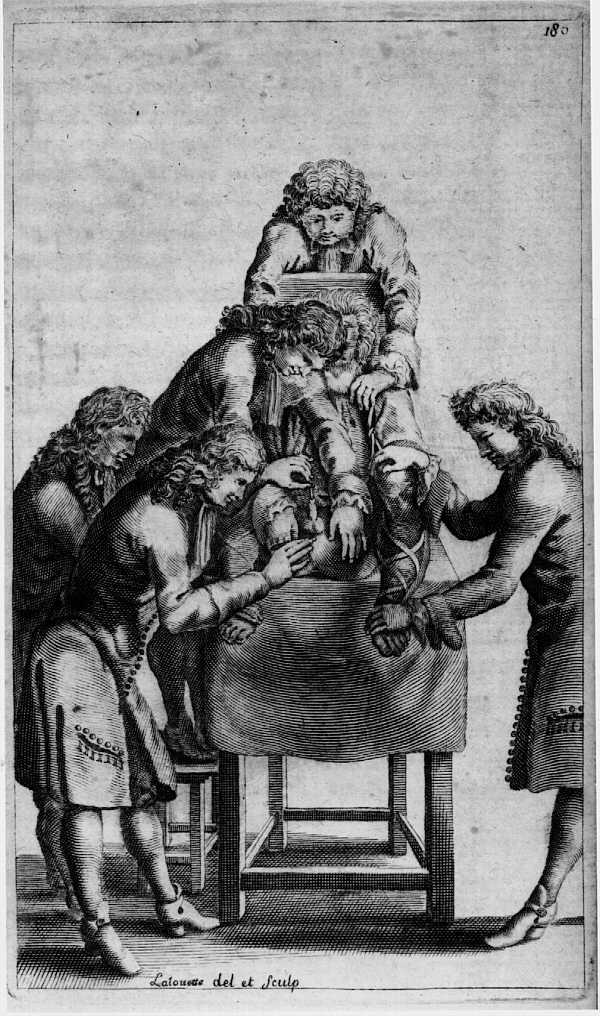
On this track, actor Guillaume Gallienne joins them to recite the text that Marais added to his piece Le tableau de l’opération de la taille. ‘La taille’ is the removal of a bladder stone, a horror Marais himself had to undergo when he was about 64.

Marin Marais opération de la taille
These people are smiling way too much.

Marais decided to pour his painful experience into a song. Much like Taylor Swift in Death by a Thousand Cuts, but with actual pain.

The text details the procedure. If you don’t understand French, consider yourself lucky. The music expresses the feelings of the patient. At the crucial/most excruciating moment, Marais decides the traditional Baroque style cannot capture the mood and skips ahead to early-twentieth-century expressionism. Who can blame him?

9. We played some open chords and rejoiced, for the earth had circled the sun yet another year (Dustin O’Halloran)

Echoes orchestra of the swan

Featured on: Echoes (Orchestra of the Swan)

Midlifers like me remember the concept of ‘mix tapes’: a carefully selected collection of songs that fit on a 60-or 90-minute cassette tape. The idea was that such a highly personal selection would reveal to the recipient, usually a love interest, how sophisticated we were – without the hassle of actually having to express a feeling or a thought. Unsurprisingly, that never worked. Not once.

Mix tape
Newsflash: Sophie erased your assortment of Morrissey and Nick Drake songs to make a ‘serious beats’ compilation for a guy named Chuck.

Orchestra of the Swan uses the mix tape concept to present a range of compositions that have no apparent reason to be on the same record: from Bach and Glass to Portishead and The Velvet Underground. If there’s an overarching message in all this, I couldn’t find it. It’s just a varied, enjoyable listen; sometimes, that’s all you want.

The track that stands out most is this minimalist piece, originally by the ambient duo A Winged Victory for the Sullen. The backbone of the composition consists, true to the title, of only a few open chords. They’re surrounded by flutters in the violins and some well-timed sighs of the cello.

Remove or add a few notes, and this would become the kind of music they generously disperse through your local wellness center. As it is, it sounds equally relaxing and moving. Halfway through, there’s a delightful Schubertian shift in the harmonies – always good for extra points in my book.

8. Fuga – allegro con spirito from piano sonata in e-flat minor, Op. 26, (Samuel Barber)

Barber piano sonata

Nobody could accuse Samuel Barber of taking the easy road when he started his piano sonata. It’s a composition that summarizes at least two centuries of keyboard music, with nods to Bach, Beethoven, Schoenberg and Gershwin.

It’s all the more impressive that the piece presents a unified whole where the seams never show. This final movement combines a classical fugue with jazzy inflections, twelve-tone rows and some Debussy-esque orientalism – ending with a humorous twist that would have pleased Papa Haydn.

Speaking of whom:

7. Adagio from Symphony nr. 31 (Joseph Haydn)

Haydn symphony 31

Featured on: Haydn 2032, Vol. 13: Horn Signal (Il Giardiono Armonico – Giovanni Antonini)

Giovanni Antonini and Il Giardino Armonico got it into their heads to record all 106 Haydn symphonies by 2032. Each – beautifully packaged – volume presents a few works under some common theme. On volume 13, it’s the presence of a prominent section of no less than four horns.

This early adagio in a gently rocking siciliano rhythm is far removed from the monumental ‘London symphonies’ of the older master. Haydn wasn’t yet speaking to the world but trying to please his master by catering to the strengths of the members of his ensemble. Each gets his turn to shine, with a special role for the horns, of course. But the young(ish) ‘master of form’ already knows how to unite it all into one balanced and engaging whole.

6. Tarentelle, pour flûte, clarinette et orchestre, op. 6 (Camille Saint-Saëns)

Bacchanale saint-saens

Featured on: Bacchanale: Saint-Saëns et la Méditerranée (Zahia Ziouani)

Camille Saint-Saëns visited Algeria no less than eighteen times. There, he picked up some tunes to include in several ‘oriental’ compositions.

These days, such compositional curiosity could lead to accusations of cultural appropriation. And you can’t deny that in those heydays of French colonialism, the musical exchange didn’t exactly happen on equal terms. So it’s nice that on this record, Zahia Ziouani combines the orientalism of Saint-Saens with contemporary Arabic songs.

The track I’ve chosen is an airy tarantella – Italian rather than oriental and with some Viennese flavors in the middle part. The flute and clarinet tumble acrobatically over each other, with other instruments sporadically joining in. It’s an impressive demonstration of Saint-Saëns’ compositional skill and keen talent for orchestration.

5. Solstice In/Solstice Out (Anna Meredith)

Nuc Anna Meredith

Featured on: Nuc (Ligeti Quartet – Anna Meredith)

Two tracks for the price of one, because they’re as indivisible as yin and yang. Solstice In drives up your blood pressure through a string quartet that moves from agitated glissandi to dull and obsessive pizzicati, combined with a piercing trumpet. Solstice Out brings you down again when both strings and trumpet are muffled and hesitant. It’s kind of like a musical hot-and-cold bath to both jolt and soothe your nerves.

4. Dans mon jardin à l’ombre (Anonymous)

Mon amant de saint-jean

Featured on: Mon amant de Saint-Jean (Stéphanie d’Oustrac – Le Poème Harmonique)

In 2023, I raved about an album by Joel Fredriksen that artfully combines Leonard Cohen’s songs with Renaissance chansons. One of those songs could have easily made this list. But I decided to include something from another album with a similar approach. It serves a fricassee of 17th-century popular songs, 17th-century Italian opera, and 20th-century popular songs – though never within the same tracks.

Thanks to a distinctive accordion and d’Oustrac’s impressive and theatrical delivery, this album sounds so French that it should come with a complimentary baguette. This track is a dark tale about a woman turning down a handsome young soldier because she’s married to a jealous, even violent older man. Musically, it would pair remarkably well with Cohen’s The Partisan.

3. Ah ch’infelice sempre (Antonio Vivaldi)

Sacroprofano

Featured on: Sacroprofano (Tim Mead – Arcangelo – Jonathan Cohen)

There are still those who look down on Vivaldi because he was ‘formulaic.’ They’re wrong for two reasons. First, every Baroque composer was formulaic by later standards. Yes, even J.S. Bach. Two, listen to an aria like this one and tell me with a straight face that this would be out of place in the St Matthew Passion.

The lyrics would have to be adapted, as this aria recounts the peculiarly frustrating sensation of being rejected by a nymph. Much like Cold As You by Taylor Swift, but with a minor divinity from antiquity instead of an emotionally unavailable dude from the Nillies.

Plucked strings express the falling tears in the A and A’ sections. The ending of the contrasting B section is lovely: one note hangs like an unfinished thought when the A’ section unexpectedly kicks in. It demonstrates that no formula is ever exhausted in the hands of a genius.

2. Ich will schweigen (Johann Hermann Schein)

Ein deutsches barockrequiem

Featured on: Ein Deutsches Barockrequiem (Vox Luminis – Lionel Meunier)

In 2023, the wealthiest man in the world conclusively revealed himself to be a narcissistic and delusional cartoon villain. As if that fact wasn’t scary enough, a surprising number of people are happy to condone his behavior because he’s a genius – just like Beethoven, J.S. Bach and Taylor Swift. ‘Genius’ is a label that we apply very quickly. I did it three sentences ago. And it’s not without its risks, like inflating the contribution of a few while underestimating those of the many.

Although Johann Hermann Schein is dutifully mentioned in all books on baroque music, no one would ever call him a genius.

Johann Hermann Schein
Although he had the hair of a genius. A MAD genius!

And yet, he composed what I consider to be one of the greatest masterpieces of the era. At least since I first heard it two years ago. It’s now recorded by my favorite baroque ensemble and, thus, an immediate certainty for this list. The text is a typical example of the long-lost virtue of humility, even slipping into the less commendable self-humiliation before the eyes of the Lord.

It ends with the sentence, ‘Ach wie gar nichts sind doch alle Menschen!’ – Oh, how all people are really nothing. Schein’s triumphant setting is paradoxical but fitting. Because what thought could be more liberating, both in the 17th century and today?

Elon Musk
Pictured: nothing

1. Maestoso from piano concerto nr. 1 in d minor (Johannes Brahms)

Brahms first piano concerto

Featured on: Brahms: Piano Concertos (Simon Trpčeski – Cristian Măcelaru – WDR Sinfonieorchester)

I earlier outed myself as middle-aged. Though that has been mathematically correct for quite some years, I’ve only truly felt it in 2023.

One of the great things about growing older is that you’re less likely to be taken on a rollercoaster by your emotions. But it unfortunately also means that music doesn’t ‘come in’ as powerfully as it used to.

Gone are the days when I could put on Beethoven’s Seventh or Schubert’s Unfinished at any time of the day and immediately enjoy the feeling of having access to all the sorrow and joy entangled with human existence. These days, I’m just as likely to mellow out to a Haydn adagio. Nice, but not quite the same.

But I’m also not that old yet. And I particularly feel that when I’m exploring the works of the young Johannes Brahms. His first piano concerto was finished shortly after the suicide of Robert Schumann – his friend, mentor, and husband of the love of his life. They say the opening chords picture that fateful leap into the Rhine. It doesn’t get much more adolescently pathetic than that. And I mean that in the best possible sense.

The concerto is not virtuosic but challenging to play, which is the exact opposite of what you would want as a soloist. The orchestration is also not particularly brilliant, as Brahms was still refining that part of his craft. Its first performances were not well received. Today, it’s respected, of course, but not nearly as popular as, say, Beethoven’s 3-4-5, Tsjaikovsky 1, or Rachmaninov 2.

None of that matters when you listen to this fantastic recording. The chemistry between the soloist and orchestra is out of this world, as is the sound quality. It never failed to entrance me, remind me what got me into classical music in the first place, and even make me feel twenty again!

And if you’ll now excuse me, I must get New Year’s dinner going. I won’t sleep a wink if I eat after 8 p.m.

Richard Wagner’s Das Rheingold

As every classical music lover must at least once in their life, I will attend Wagner’s complete Ring over the next two years. Because one does not simply walk into a world of gods, giants, dwarfs, dragons and incestuous relationships, I’ll do my homework before every installment – and share it here. Starting with: Das Rheingold.

Wagner’s collection of four operas, Der Ring des Nibelungen, is essentially the earliest example of the modern fantasy genre. Without it, there would probably be no Lord of the Rings, Star Wars, or Game of Thrones.

That reference to blockbuster movies and TV shows may help lessen the concerns of those about to embark on fifteen hours of German opera. But it also runs the risk of creating false expectations.

Disappointingly, the Ring doesn’t contain massive assaults on medieval strongholds or titillating whorehouse scenes.

Richa
Although some album covers might suggest otherwise.

There may be some impressive stagecraft involved. And the music can be as deliciously pompous as the best Hollywood has to offer. But most of the time, you’ll be watching a handful of people elaborately singing about their convoluted feelings.

Are you worried again? The good news is that you can gently roll into it all with Das Rheingold, the opera that packs the most action of the four Ring installments, in the tiny duration of two and a half hours. However, be aware that there probably won’t be an interval, as there are no breaks in the music between the four scenes.

An accessible appetizer to the Ring’s main courses

Das Rheingold is also the Ring opera that’s easiest to understand. In its entirety, Der Ring des Nibelungen is an incoherent mess. Nietzsche speculated that Wagner deliberately obfuscated the story because he feared it was too simplistic. There is, however, a less malicious explanation for the Ring’s maddening inconsistencies. From the time Wagner wrote the original story until the moment he composed its last note, more than twenty-five years had passed. Twenty-five years in which Wagner transformed from an arrogant, antisemitic left-wing revolutionary/terrorist to an arrogant, antisemitic right-wing bootlicker of Europe’s craziest monarch. Naturally, the big messages he wanted to convey with his operas had also changed.

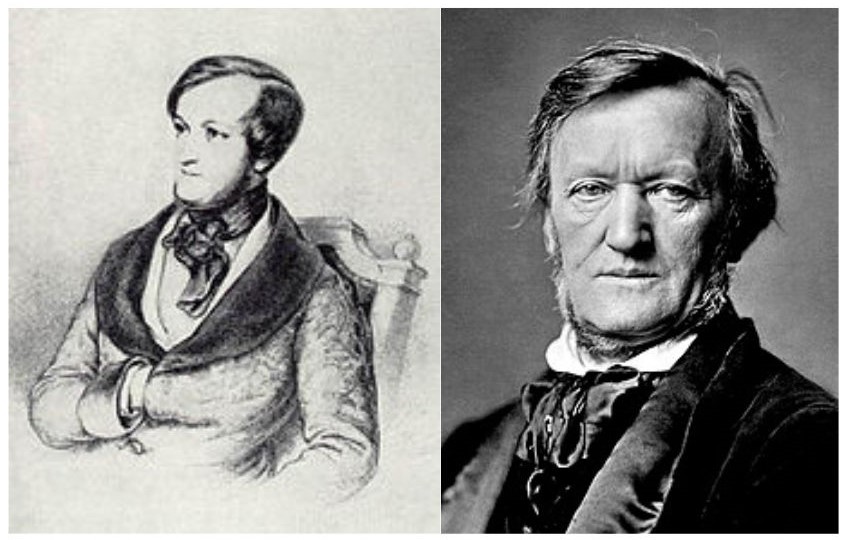
Young and old Richard Wagner
Richard Wagner in 1840 and 1871

Das Rheingold, composed in 1854, stays true to the Ring’s original concept. In 1848 – when revolutions engulfed Europe – Wagner cobbled together his ‘myth’ from various Scandinavian, German and Greek source materials. It’s meant to be a story that presents universal human themes. And we’ll see that it sometimes resonates eerily with the world we know today. But in essence, it’s a commentary on 19th-century society, particularly its inequalities.

Characters in Das Rheingold

Gods

As a lot of people know, the Ring is about gods. Wing-helmed, blonde-haired, sword-wielding gods. And you might think, knowing what everybody knows about Wagner, that these divine heroes are personifications of German superiority.

In reality, Wagner’s gods are a sad bunch. They’re the supposed leaders of their world. But their power doesn’t come from their spiritual, intellectual, or moral superiority. Instead, they use violence to get their way. More importantly, they make social rules that they then break themselves. They’re hypocritical, vain and corrupt. For Wagner, they represented the contemporary ‘enlightened’ monarchs and clergy.

In Das Rheingold, only Wotan (the ruler of the Gods), his wife Fricka, the half-god Loge and the earth goddess Erda are important characters. The others merely hang around to demonstrate their pointlessness.

Dwarves

Like in Lord of the Rings, Wagner’s dwarves are driven by material lust. Their home is Nibelheim, where they delve for gold in the earth’s bowels and have little interest in anything else. They’re also quite hideous to look at. For Wagner, they probably represented the 19th-century bourgeoisie.

In Das Rheingold, we meet the dwarf brothers Alberich and Mime.

Giants

Giants are big and stupid. They’re also hard workers. For Wagner, they probably represented the proletariat, although nobody seems to know for sure.

In Das Rheingold, we meet the giant brothers Fafner and Fasolt.

Rhine maidens

The Rhine maidens are water-nymphs that swim, sing and protect the Rhine gold for which the opera is named. They’re beautiful and haughty, two facts that will propel the story to its disastrous conclusion.

The story of Das Rheingold

The original sin

The iconic opening of Das Rheingold is Wagner’s musical evocation of the beginning of the world. It starts not with a bang but a whisper: a steadily expanding E flat major chord.

We then meet the three Rhine maidens frolicking in the water. Suddenly, they notice Alberich ogling them. The dwarf tries to seduce them, but they mock him for his hideous appearance.

In his rising frustration, Alberich sees the gold the Rhine maidens are meant to guard. They tell him that anyone who wins the gold and makes a ring out of it will become master of the world. But he would have to ‘forswear the delights of love.’

Richard Wagner Das Rheingold Rhine maidens

What then happens is Wagner’s version of the downfall. Against all expectations, Alberich, the world’s first incel, renounces love in exchange for power. He steals the gold, leaving the Rhine maidens panicked and grieved.

In this first scene, Wagner, the dramatic genius, introduces the opposition that defines the entire Ring: love versus power.

The misguided contract

We now meet the gods high up a mountain. There, Wotan built a fabulous castle named Walhalla – an ostentatious symbol of his power. That’s to say, the giants did the actual building. And Wotan is only now pondering how to reward them for it. Being a god, he entertains the silly illusion that he’s above mundane stuff, such as money.

He’s so silly that he drafted a contract with the giants: in the event of a cash flow problem, he would fulfill the payment in kind by giving away his sister-in-law Freia. You could argue that can be a small price, but in any case, Wotan’s wife Fricka – Freia’s sister – isn’t too happy with this arrangement. Neither are her brothers Donner (god of thunder) and Froh (god of spring).

The gods’ attachment to Freia is not only emotional. Her golden apples also ensure their eternal youth. So, her disappearance would mean a certain death for everyone on that hill.

What was Wotan thinking?

The answer is that he took the advice of Loge, the (half-)god of fire who joined the Gods for opportunistic reasons. He’s the smart guy in the Ring, but that doesn’t mean he’s wise. In fact, his guidance will lead to the gods’ downfall.

Loge promised Wotan he would find a way out of his promise to the giants, but he’s now nowhere to be seen. Meanwhile, the giants have arrived, demanding that Wotan keeps his word. Notice that Wagner’s music to characterize the giants is as deliciously unrefined, even clownish, as Fasolt and Fafner themselves.

Just in time, Loge joins the scene. He tells everyone the story of Alberich stealing the gold from the Rhine maidens. Surely the gods should be willing to steal it back and return it to the rightful owners? Most Gods agree, also because they feel the upstart dwarf could become a challenger for the power that they consider their birthright.

Wotan isn’t so sure. After all, stealing from a thief is still stealing – against his precious rules. Until Fasolt and Fafner mention that the Nibelung’s gold would be a fitting reward for their labor. Wotan feels a sudden compassion for the Rhine maidens and decides to go with Loge to Nibelheim to retrieve the gold.

In capitalist hell

The descent to Nibelheim is one of those scenic and musical transformations that Wagner excels at. As we leave the stately atmosphere of Walhalla behind, we’re greeted with a restless motif in the strings of the orchestra and the sound of hammering on eighteen anvils. Yes, literally eighteen anvils:

This is Wagner’s unforgettable evocation of the horrors of the industrial revolution. Alberich has become an entrepreneur and turned his home into a capitalist dreamland.

His fellow dwarves, including his brother Mime, are forced to work for him 24/7. Just when we come in, he’s fitting the Tarnhelm, a piece of high-tech headgear that can transform him into any shape or make him invisible. The explicit purpose is to spy on his workforce without himself being seen. All pretty visionary stuff.

Richard Wagner's Das Rheingold Nibelheim
Pictured: a typical Amazon warehouse

On meeting Wotan and Loge, Alberich boasts about his wealth and power. Soon, he will bend the world to his will, and the reign of the gods will be over. When the cunning Loge asks Alberich how he can prevent someone from stealing the ring, Alberich demonstrates the power of the Tarnhelm by transforming into a serpent.

Loge then asks Alberich if he can also turn into something tiny. What follows is comic book stuff. A moment later, Alberich is bound and dragged to the divine mountain top.

A curse and fratricide

Alberich comes up with a plan: give up his hoard of gold to the intruders but keep the ring, and then start again. But the plan fails. After the gold is transferred, Wotan demands that Alberich also give up the ring, forcefully taking it from him. Just before he is released, the dwarf curses the ring: all who have it will suffer, and all who don’t have it will want it.

It won’t take long before the curse starts to do its work. When Fasolt and Fafner arrive, they put the gold in a pile before Freia. Only when she’s entirely out of sight (Fasolt is genuinely in love with her) shall they be content.

Wouldn’t you know it, when all the gold is on the pile, exactly one ring-shaped whole remains through which one of Freia’s fair eyes can still be seen. The giants demand that Wotan give up the ring, which the god, already consumed by the ring’s power, refuses.

Then Erda, the earth goddess one step higher in the divine hierarchy than Wotan, shows up. She orders Wotan to give up the ring. But also casually mentions that the Gods will perish in any case, which is weird.

Anyway, Wotan decides to follow Erda’s advice. He hands the ring to the giants, who immediately start fighting over it. In a literal slapstick moment, Fafner kills Fasolt with his stick and walks away with the gold and the ring.

The gods decide the show’s over, and it’s time to settle into their mighty new fortress. Donner has his moment in the spotlights when he conjures up a thunderstorm, after which a rainbow bridge allows the gods to stride to Walhalla.

Richard Wagner's Das Rheingold Walhalla

While the other gods seem to think their power is secured now the ring is in the hands of the stupid Fafner rather than the cunning Alberich, Wotan is not so sure. But how can he retrieve the Ring without breaking his own precious laws?

Around that central dilemma, the next twelve hours of opera will revolve.

Erlkönig by Schubert: the four most haunting moments

A few weeks ago, I heard a radio interview with an acclaimed singer who was asked about her favorite works. The first on her list was Schubert’s Erlkönig – the song that cured her of her opinion that classical German piano lieder are – in her words – “girl/boy scout music.”

Such scandalously unsophisticated sentiments are rarely uttered on a classical radio station. I certainly raised an eyebrow. And I’m sure the other three listeners did as well.

But she wasn’t completely wrong. For me, Franz Schubert is the only true son of God who walked the earth for 30-ish years. But even I will never voluntarily listen to something like this:

It’s not bad, of course, just meh.

My mother played a lot of that stuff when I was ten years old – hogging the stereo that I clearly needed for my Duran Duran CDs. So it’s no wonder that I grew up with a healthy disdain for the whole lied genre.

For me as well, that changed because of one song that instantly blew me away: Erlkönig. It still does that, each time I listen to it.

Especially these three moments never fail to raise at least a few hairs on my arms …

1: The opening: ‘are you scared yet?’

Schubert’s Erlkönig is a setting of a poem with the same name by Goethe, itself based on a traditional Danish ballad called Elveskud. It’s a kind of horror miniature about a boy dying while in his father’s arms. The perpetrator is a fairy king and his alluring daughters, who are all only visible to the son.

Erlkönig Schubert

Schubert immediately cuts off your breath with these iconic opening measures:

Erlkönig Schubert manuscript
The notes are Schubert’s handwriting, the blue and red rectangles are made with cutting-edge 21st-century technology. Notice the pp (very soft) marking on the left, which a lot of interpreters discard.

Those octave triplets in the right hand (marked blue) are devilishly difficult to play, especially because you have to keep that up for most of the piece. Unless you do it at half the tempo, of course. The received wisdom is that it represents the galloping of the horse that speeds home with father and son. Its psychological effect is more important: literally hammering home a sense of panic and inescapable doom.

The motif in the left hand (marked red) – simply trotting up and skipping down a minor scale – completes the spooky atmosphere. The stage is all set for the entrance of the narrator, when Schubert inserts these two bars (0:18 in the video above):

Schubert Erlkönig manuscript

Face it, this is put in purely for its effect value. It’s not so much dictated by musical logic, but rather by the need to emphasize to the listener that this is going to be scary – no, really scary – stuff.

2. The true villain is revealed: ‘stop whining, silly child’

Erlkönig is a through-composed song, which means there are no strophes or refrains. One of the main tools Schubert uses to both differentiate the four characters – narrator, father, boy and Erlking – and give a clear direction to the story, is multiple key changes. Watch this excellent video analysis if you want all the details on that.

In the beginning, the narrator gives us the bare minimum of factual details we need to understand the story:

Wer reitet so spät durch Nacht und Wind?
Es ist der Vater mit seinem Kind;
Er hat den Knaben wohl in dem Arm,
Er faßt ihn sicher, er hält ihn warm.
Who rides, so late, through night and wind?
It is the father with his child.
He has the boy well in his arm,
He holds him safely, he keeps him warm.

This whole fragment stays more or less in the home key of G minor, even emphatically landing there on ‘warm’ (0:58 in the video above) Then the boy starts to express his worries in C minor, a key close to G minor:

Siehst, Vater, du den Erlkönig nicht?
Den Erlenkönig mit Kron’ und Schweif?
Father, do you not see the Erlking?
The Erlking with crown and cape?

The father casually dispels his concerns:

Mein Sohn, es ist ein Nebelstreif.My son, it is a streak of fog.

This is the second hair-raising moment on my list. It’s in B flat major – the first time the music veers to one of the ‘happy’ keys. It fits the idea of the father soothing the boy. To my ears, there’s also something ‘misty’ about the sound of that chord, which fits the text. But that could be just me.

In any case – as all listeners know – the father is dead wrong. Is he admirably comforting the boy? Or is he failing to take him seriously? And if the latter, is he perhaps complicit to the drama that’s about to unfold? Even the real villain of the story? Tellingly, when the Erlking next launches his charm offensive at the boy, it’s in the same key of B flat major (1:42 in the video above):

Du liebes Kind, komm, geh mit mir!
Gar schöne Spiele spiel’ ich mit dir;
Manch’ bunte Blumen sind an dem Strand,
Meine Mutter hat manch gülden Gewand.
You dear child, come, go with me!
(Very) beautiful games, I play with you;
Many colorful flowers are on the beach,
My mother has many a golden robe.

3. No more mister nice guy

The pattern above is repeated a few times in the song: the Erlking tries to seduce the boy, the boy pleads to the father, the father shrugs it off. Then comes the climax of that to-and-fro. First, the Erlking gives the charmer approach a final try with an extra creepy line:

Ich liebe dich, mich reizt deine schöne Gestalt;I love you, your beautiful form excites me;

But then he finally pulls off his mask. (Even though that never fooled the boy nor the listener in the first place):

Und bist du nicht willig, so brauch’ ich Gewalt.And if you’re not willing, then I will use force.

It’s the timeless story of seducer turning into abuser. The musical translation of this by Schubert (3:22 in the recording above) is obvious yet immensely powerful: a sudden key change from E flat major to D minor. That last one was long considered the most tragic and morbid of all keys. Most famously, it’s the key of Mozart’s 20th piano concerto, Don Giovanni and requiem. Also, compare this fragment to the last comforting words of that useless excuse for a father just a few seconds before:

Erlkönig Schubert score
Again, there are two villains in this story.

4. The shock that isn’t

Schubert wasn’t the only composer to set Goethe’s Erlkönig to music. About 100 others preceded or followed him, including very respectable ones such as Johann Friedrich Reichardt, Louis Spohr, and Carl Loewe. Beethoven made a sketch, but never finished it. By no means was Schubert’s Erlkönig the universal favorite. Goethe himself dismissed it because he didn’t like the through-composed format. Wagner preferred Loewe’s setting, because, you know, Wagner.

It’s instructive to compare these different settings. Take the ending of the poem. The father finally realizes his son isn’t acting like a crybaby and speeds to the farm. But when he arrives there, the child is already dead.

Dem Vater grauset’s; er reitet geschwind,
Er hält in den Armen das ächzende Kind,
Erreicht den Hof mit Mühe und Not;
In seinen Armen, das Kind war tot.
It horrifies the father; he swiftly rides on,
He holds the moaning child in his arms,
Reaches the farm with great difficulty;
In his arms, the child was dead.

A lot of composers treat this like a shocking denouement. Take Loewe:

Or Spohr:

Especially in Loewe’s setting, the effect is a little bit comic. Are we supposed to be astonished by this outcome (especially since we can expect something that rhymes with ‘not’?) Schubert treats the ending in the most matter-of-fact way possible: the outcome is recited rather than sung, abruptly followed by the most unsurprising of chord progressions.

Again, this sounds to me like a final reproach to the father. This is the price he pays for his arrogant dismissal of his son’s cries for help. Why spend any more time on this pompous jackass? Next!

Or more likely, repeat!

Weber’s Der Freischütz: the ultimate German opera

Quick, what image springs to mind if I ask you to think about the ultimate German opera? Winged helmets? Slayed dragons? Heavyset blonds with harnessed bosoms and pigtails?

German opera stereotype
Genau.

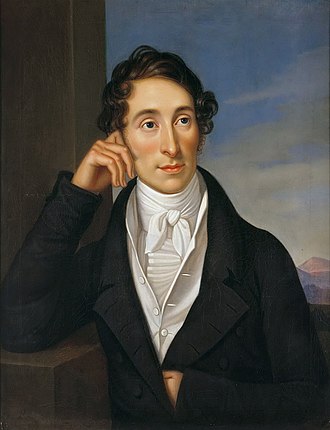
Well, you’re wrong. Curiously, the quintessential German opera doesn’t tick any of those boxes. And it’s not by Wagner. It’s Carl Maria Von Weber’s Der Freischütz, premiered in 1821 – more than 10 years before Wagner completed his first opera.

National treasure

Der Freischütz was the last opera performed in Dresden’s Semper opera house during the Nazi regime – before the building was bombed to the ground. It was also the first opera staged in the makeshift theatre that the Dresdeners erected after the war. And when the opera house was properly rebuilt by the communist East-German regime, it opened with … that’s right.

So, Der Freischütz’s popularity bridges ideological divides. It’s considered a national treasure by all Germans from Aachen to Görlitz and from Flensburg to Oberstdorf. If they’re into opera, of course.

As creating a real German opera was one of his greatest ambitions, Weber would certainly be beaming with pride if he knew this. Or not?

Weber Freischütz

Historical context: dreaming of a national German culture

An obsession with creating national styles was commonplace in the 19th and well into the 20th century. But none took it so seriously as the Germans. In fact, it was essential to the birth of the concept of classical music and its Germanic canon.

If you feel the need to affirm your identity, you’re often not happy with who you are. That was as true in the early decades of the 19th century as it is today. In Weber’s time, the quilt of miniature states that made up the German territory had been trampled numerous times. Contrary to ‘real’ countries like Great Britain and Russia, they were nothing more than a series of hors d’oeuvres for the ravenous armies of Napoleon.

It’s therefore no wonder that there were some who began to dream of a grand unification in order to be taken seriously on the European stage.

That dream was particularly popular with the middle classes. The nobility found a lucrative occupation in reigning all these miniature states. It was understandably less enthusiastic about the idea.

It was therefore still too soon to begin the political unification of Germany. But what about a cultural one? First, prove that all German people share the same character. Then it’s easier to plead that they belong under the same flag.

Unsurprisingly, it was Wagner who would push this nationalist opera to its extreme. The best illustration is Lohengrin. Henry the Fowler, the 10th Century Saxon king sings stuff like:

“East and West, to all I say:
let every acre of German soil put forth troops of soldiers,
never again shall anyone abuse the German Empire!”

In a 10th-century context, that makes no sense. But for 19th-century audiences, the message couldn’t be clearer. And for post-mid-20th century audiences, it sounds downright menacing. Which is one of the reasons why Lohengrin won’t be crowned the ultimate German opera soon.

The story

The protagonists of Der Freischütz are also in the presence of royalty: the Bohemian Prince Ottokar. He’s not particularly wise, just pompous. More importantly, he doesn’t have anything to say about a German empire.

In fact, the word ‘German’ isn’t mentioned once in the entire libretto. The story is wholly free of politics and might as well take place in a Game of Thrones-like fictional universe. Except for a few mentions of the thirty-years war, which is recently over when the narrative begins.

Prince Ottokar visits a small Bohemian village to preside over a shooting contest in honor of his revered ancestor Ottokar II, also known as the Iron and Gold king. The stakes are high, because the winner becomes the new head forester and marries the daughter of the current forester.

Yes, that does sound like a potentially uncomfortable arrangement. But thanks to a happy and typically operatic coincidence, Max (the town’s best shooter) and Agathe (the head forester Kuno’s daughter) are already madly in love.

You can see why they’re made for each other, being equally boring personalities. Max is whiny, insecure and displays an unhealthy sense of entitlement. Agathe is a drama queen and a religious nut. But the premise of the opera is that we root for their eternal love. And so we do.

Weber Freischütz cast
The cast of Der Freischütz

Luckily, there are also a couple of exciting bad guys around: Kaspar, a war criminal, and Samiel, a servant of the devil who owns Kaspar’s soul. When Max hits an unlucky streak with his shooting, he seriously begins to doubt his chances at the contest. Kaspar helpfully steps in, persuading Max to use magic bullets that never miss their mark.

What Max doesn’t know, is that the seventh of these bullets belongs to Samiel who can aim it anywhere he wants. And what Samiel wants, is to kill Agathe. Why? Because he’s evil, that’s why. You know better than to ask for logic in an opera libretto.

Don’t worry, there’s also a wise old hermit who shows up just in time to save the day. He manages to deflect the seventh bullet to Kaspar. Kaspar dies, Samiel devours his soul, Max repents, Agathe and Max marry. The end.

Classic German jolliness

So what makes Der Freischütz the ultimate German opera – if it’s not the story? It’s not the music either. When Max and Agathe sing their typical primo uomo and prima donna arias, it’s in the style of Italian opera. And just like Beethoven before him, Weber uses mélodrame – a mix of spoken dialog and instrumental music – which he borrows from the French Grand Opéra. It’s the structural device behind the famously spooky wolf’s glen scene, where Max and Kaspar descend in a narrow forest valley at midnight to forge the magic bullets.

Some see this atmosphere of supernatural forces hiding in dark forests as typically German – linking the magic bullets to a certain magic ring, for example. My feeling is that Tolkien would like a word about that, not to mention 27,000,000 Scandinavians.

Maybe Der Freischütz is at its most German when it’s in folk mode. When hunters are blowing, peasants are drinking, bridesmaids are giggling. Take this hunters’ chorus for instance:

Gemütliche moments like those are sprinkled throughout Der Freischütz. They’re necessary to make the bombast of the main characters palatable. And together with the supernatural hocus-pocus, they’re no doubt primarily responsible for the opera’s enduring popularity – with Germans and non-Germans alike.

Weber realized that, and didn’t like it one bit. In his next opera Euryanthe, which he officially labeled a “big romantic opera”, he decided to improve his operatic concept by weeding out the fun stuff. The reaction of the public was a resounding ‘meh’. Weber wrote:

“The expectations of the masses have been puffed up to such an absurd and impossible pitch by the wonderful success of Der Freischütz, that now, when I lay before them a simple serious work, which only aims at truth of expression, passion, and characteristic delineation, without any of the exciting elements of its predecessor, what can I expect? Be it as God will!”

Apparently, there’s a big difference between the German opera the bourgeois elite had in mind and the opera actual Germans liked.

Recommended recording

Unfortunately, it’s probably this beer-and-sausage Germanness that hurt Der Freischütz’s popularity in the second half of the 20th Century. Remember, when we were all way too sophisticated to enjoy simple stuff? And a bit suspicious about all things German, that too.

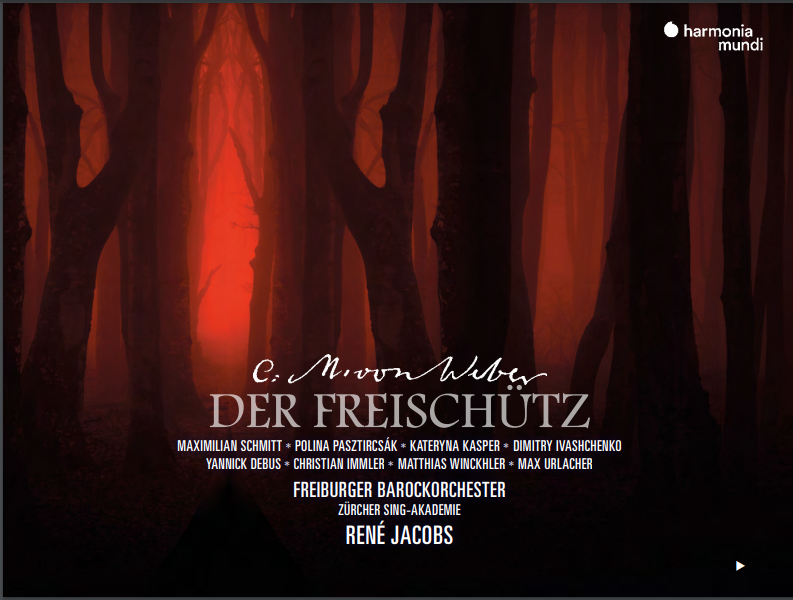
Luckily, those days are over. Der Freischütz has retaken its rightful place on our stages and in our record collections. Be sure to check out the version from René Jacobs and the Freiburger Barockorchester from 2022. I’m usually not a fan of opera recordings, but Jacobs’ way of treating them like radio plays diminishes the feeling that you’re missing out on two thirds of the operatic experience.

Weber Freischütz Jacobs

To achieve his goal, Jacobs takes a lot of liberties with the source material. Like adding sounds effects and modernizing the spoken lyrics. And he expands the role of Samiel. In Weber’s opera, this demonic creature has very little to say. In Jacobs’ version, he’s constantly adding his cynical commentary to the proceedings. Actor Max Urlacher does this so bone-chillingly well that I honestly can’t imagine listening to some pieces (like the wolf’s glen scene) anymore without his contribution.

Jacobs also restores the original concept of Der Freischütz by reinstating the opening scene that introduces the hermit – so the finale makes more sense. And by adding a choir – for which he borrows some music from a Schubert opera.

This might all be a bit much for you if you’re a purist. But I think it’s an appropriate presentation of an opera that’s a mish-mash of sometimes contradictory styles and ideas – just like the country it so perfectly embodies.

Are these the best classical tracks of 2022?

Probably not. But out of the ones I’ve heard, I’ve enjoyed these the most.

Listen to the Spotify playlist

10. Qui ne regrettoit le gentil Févin, lamento à 4 (Jean Mouton)

The landscape of the polyphonists

Featured on: The landscape of the polyphonists (Huelgas Ensemble)

“He who did not mourn the gentle Févin, must surely be a rogue.” When renaissance folks honored their dead, they didn’t do it half-heartedly. Not in their texts, but also not in their music.

The gentle Févin was a colleague of Jean Mouton (1459-1522), who wrote this piece. It’s only 33 bars long in modern editions. Tenors and sopranos sing the exact same melody in canon. Basses and altos do the same with a complementary tune.

Paul Van Nevel and his Huelgas ensemble draw this out to three-and-a-half minutes by allowing the tenor and soprano to present the first part of the main melody by themselves and then bringing in the other voices. That gives you the chance to take in that beautiful line before getting engulfed by the full polyphonic jumble of notes – which can make listening to renaissance music such an ordeal.

The singers strike a tone which is fittingly plaintive without crossing into kitschy pathos. That drawn-out accent on the ‘Fé’ of the first ‘Févin’ alone was enough to land this track a spot on this list.

9. Yis’mechu (Benjamin Till)

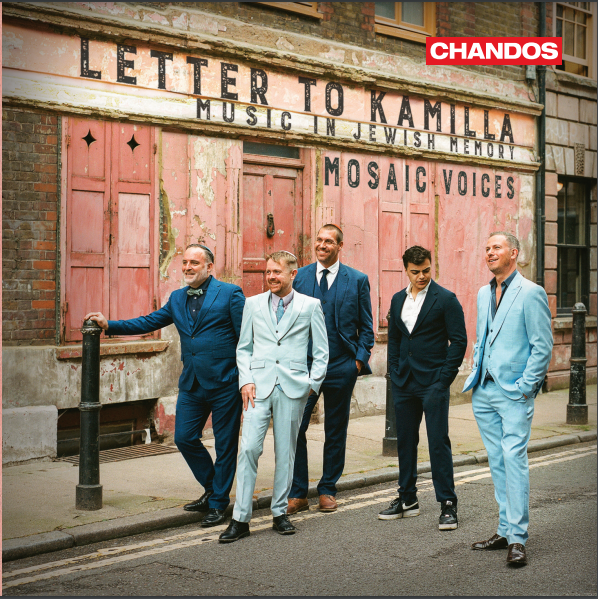
Letter to Kamilla

Featured on: Letter to Kamilla – music in Jewish memory (Mosaic Voices)

While we consider all Christian liturgical music a part of the Western classical tradition, Jewish music (often equally ‘Western’) is almost totally ignored. The kindest explanation is that Jewish music was often performed covertly and hardly ever written down. Still, there’s a lot left to be discovered and enjoyed.

Mosaic Voices is the ensemble that sings at London’s New West End Synagogue. Judging by their debut album, those services must be among the best shows in town. Apart from the basic melodies, there’s nothing ‘authentic’ about this music: the arrangements range from the typical ‘oom-pahs’ to close harmony, classical polyphonic techniques and hand-clapping. All very artfully done and with plenty of variety.

Yis’mechu is a celebration of the Sabbath, and the music fittingly bubbles with joy, even silliness – including some spicy modulations (like at 1:49). At the same time, there seems to be an undercurrent of sadness in this song, with sobs in the melodies and frictions in the harmonies. Hard to describe what exactly is going on, but it works.

8. Piano Quintet in F minor, Op. 34 – Scherzo. Allegro – Trio (Johannes Brahms)

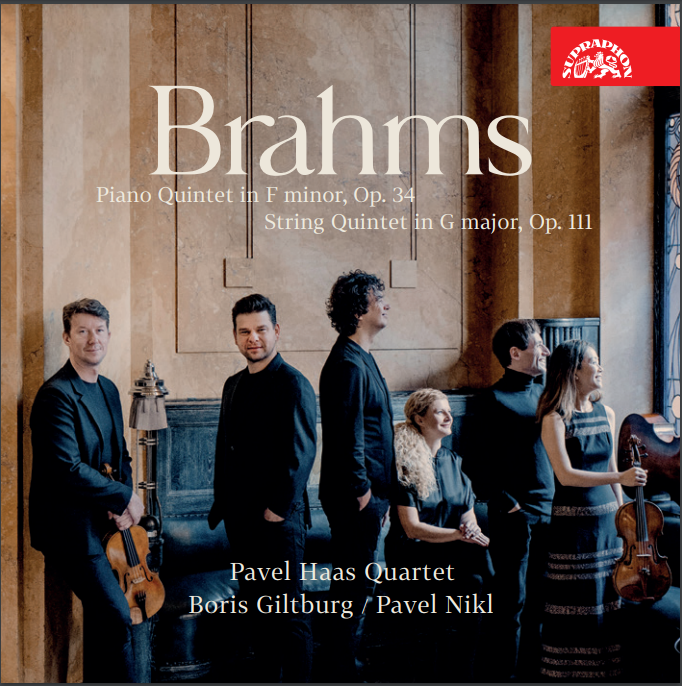
Brahms quintets

Featured on: Brahms: Quintets Opp. 34 & 111 (Pavel Haas Quartet, Boris Giltburg/Pavel Nikl)

Brahms is sometimes branded a conservative because he wanted to out-Beethoven Beethoven. But there’s no denying that precisely that ambition led him to compose – especially in his younger years – some of the most tempestuous music out there. This scherzo is as close to heavy metal as you can get without adding distortion and double bass drums.

The Pavel Haas quartet, supplemented with Boris Giltburg on piano, nail their performance with a vehemence and rhythmical precision that is out of this world. Strictly speaking, this is chamber music. But it’s pointless to imagine it in any other room than a concert hall. And impossible to listen to at home without cranking the volume all the way up to eleven.

7. Concert champêtre for harpsichord & orchestra, FP 49 – Andante (Francis Poulenc)

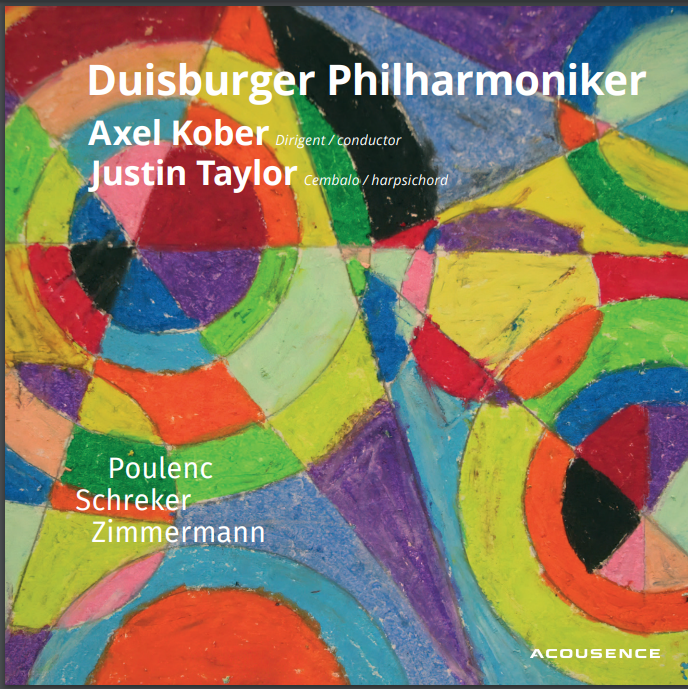
Concert Champêtre

Featured on: Poulenc, Schreker & Zimmermann: Orchestral works (Justin Taylor – Duisburg Philharmonic Orchestra – Axel Kober)

According to the booklet that accompanies this wonderful recording, Francis Poulenc (1899-1963) styled his ‘pastoral concerto’ after baroque composers such as Couperin and Rameau. But my feeling is that he was mainly channeling one of his other musical heroes: Mozart.

This movement, in a gently rocking siciliana rhythm (just as Mozart used in his KV 488 concerto), is as much about the rich wind section as the solo instrument. In fact, when the harpsichord first enters, it is to give a sort of accompaniment to the melody that just preceded it – as if it’s late for the party.

The whole piece is a grandiose display of Poulenc’s greatest talent: melodic invention. One charming tune flows into the next. Sometimes it seems you are listening to Mozart, until a peculiar detail or bold turn reminds you that this is 20th-century music. Indeed, some of the best music that the 20th century had to offer.

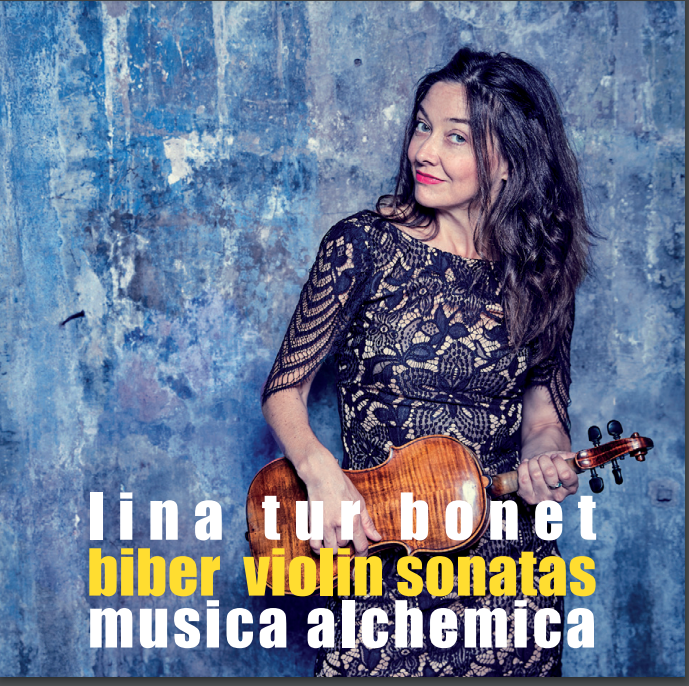
6. Variation from violin sonata V in e minor, C. 142 (Heinrich Ignaz Franz Biber)

Biber violin sonatas

Featured on: Biber violin sonatas (Lina Tur Bonet – Musica Alchemica)

Isn’t it high time for another revival of baroque music? Only this time, let’s not make it about historical authenticity, but about doing whatever you want. Because that’s the freedom that baroque composers gave us. On paper, the beginning of this Biber variation looks like this:

Variation from violin sonata V in e minor

Only the solo violin is written out in detail. The notes below are the bass notes of the accompaniment that can be worked out freely. Put a cello and a harpsichord or organ there, and you get the typical sound of many a baroque album that’s excellently suited to not distract you during dinner parties. Put it in the hands of a varied ensemble (including theorbo, harp and lute) of inventive musicians and you’re up for an engrossing listening experience that demonstrates the genius of Salzburg’s second-greatest composer.

5. Imperial march (John Williams)

Imperial march John Williams

Featured on: John Williams: The Berlin Concert (Berliner Philharmoniker – John Williams)

Apparently, Vladimir Putin is a fan of Tchaikovsky. (Who wants to be the one to tell him?) But I think there’s a good chance that he’s strutting in front of the Kremlin mirrors to this John Williams tune every night. Because pure evil never sounded so cool.

Check out the album review

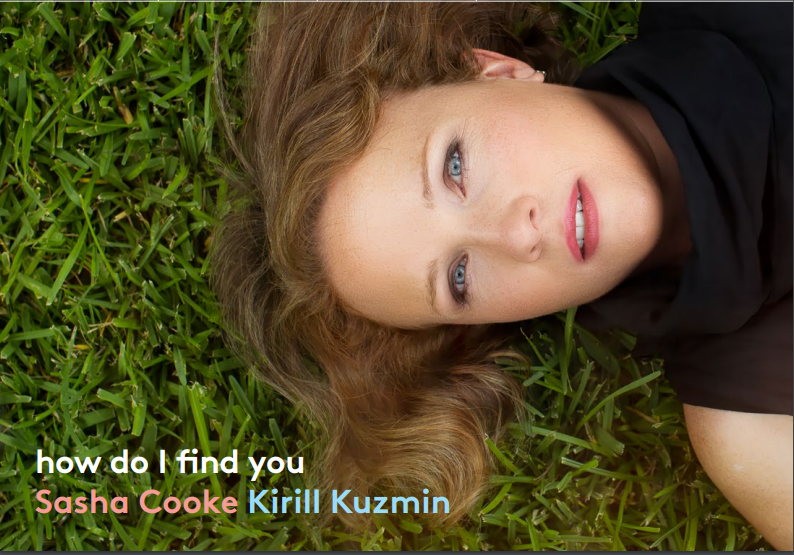
4. The hazelnut tree (Gabriel Kahane)

The hazelnut tree

Featured on: How do I find you (Sasha Cooke – Kirill Kuzmin)

Like so many of us, mezzo-soprano Sasha Cooke was cooped up inside because of the corona virus in 2020. She decided to ask a bunch of composers to send her songs inspired by their experience during that period. That resulted in the album ‘How do I find you’, a nice sampling from what you could call the ‘indie classical’ scene.

The hazelnut tree was the song that I immediately liked most. The lyrics hint to the desire – very common during that period – to disengage from the “fresh threats of doom” that are filling the papers. The music ripples nostalgically, with a piano that steadily moves the flow along while subtly commenting on the lyrics – the hallmark of good song writing since Schubert.

I admit that I never heard of Gabriel Kahane before this song. Apparently he’s also a singer-songwriter cut from the same high-quality fabric as Sufjan Stevens and Rufus Wainwright. He performs this song himself on his 2022 album Magnificent bird.

3. Ka Bohaleng/On the sharp side (Abel Selaocoe)

Ka Bohaleng/On the sharp side

Featured on: Where is home/Hae ke kae (Abel Selacoe)

Remember how baroque music allows you to do whatever you like? Well, Abel Selacoe takes this opportunity to couple a theorbo and a kora to add improvisational accompaniment to a Platti cello sonata. He also hums along with Bach’s cello sarabandes. If you adhere to delusional concepts such as historical authenticity or cultural appropriation, please go to the next item on this list.

Ka bohaleng/On the sharp side would not be out of place on a pop album – another cultural divide Selacoe bridges effortlessly. The song is dedicated to mothers everywhere. Its text is based on the Sesotho saying that a woman holds a knife on the sharp side. Meaning: never underestimate her powers.

The music is a wild orgy of different influences: a typically African web of constantly shifting rhythms, meters, accents and tempi, paired with Western classical harmonies in the strings. Presiding the whole thing with his cello and amazing voice, Selacoe keeps everything on the rails towards a delirious climax that makes you go straight to the repeat button.

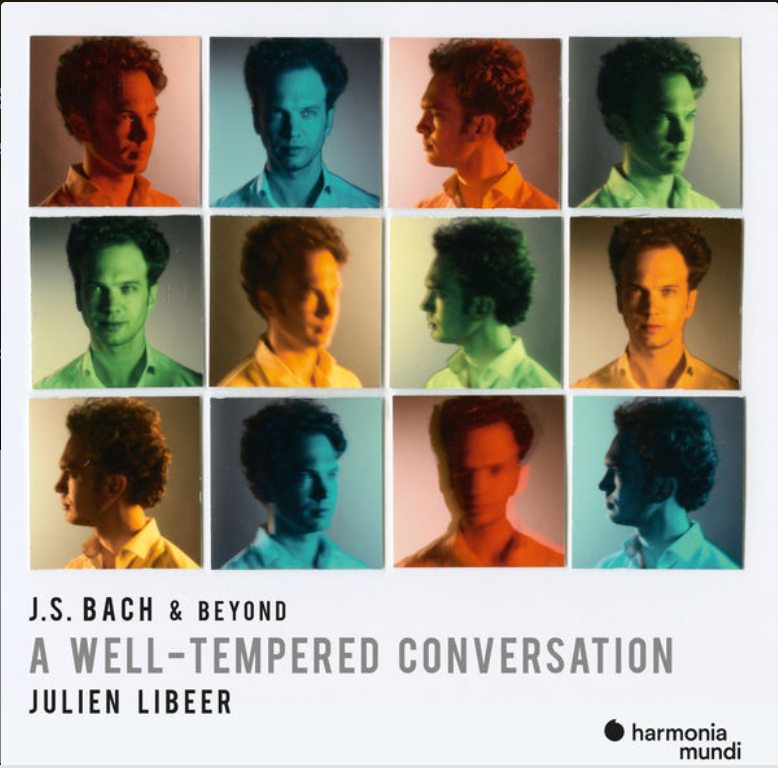
2. Fantasia in F minor for a mechanical organ, K.608 (arr. for 2 pianos by Feruccio Busoni) (Wolfgang Amadeus Mozart)

Fantasia in F minor for a mechanical organ, K.608

Featured on: J.S. Bach & Beyond: A well-Tempered conversation (Julien Libeer – Adam Laloum)

The self-playing mechanical organ was something of a marvel in the late 18th century. When Mozart was asked to write music for it, he no doubt reacted like the professional freelancer he was, “welcoming the challenge”. In truth, as he wrote to his wife, the commission bored him to death. And yet, the end result is one of his last great masterpieces.

Julien Libeer chooses this work as the halfway point of his journey through the history of keyboard music since J.S. Bach. A great choice, because Mozart’s fantasia looks back as well as forward. An opening in baroque French overture style flows into a Bach-like fugue and then an adagio overflowing with Mozartian charm. A slightly more complex and faster recapitulation of the fugue leads to the climactic ending.

At the same time, like a lot of late Mozart, the music looks forward to early romanticism, particularly – especially in this arrangement – to Schubert’s four-hand fantasia in the same key.

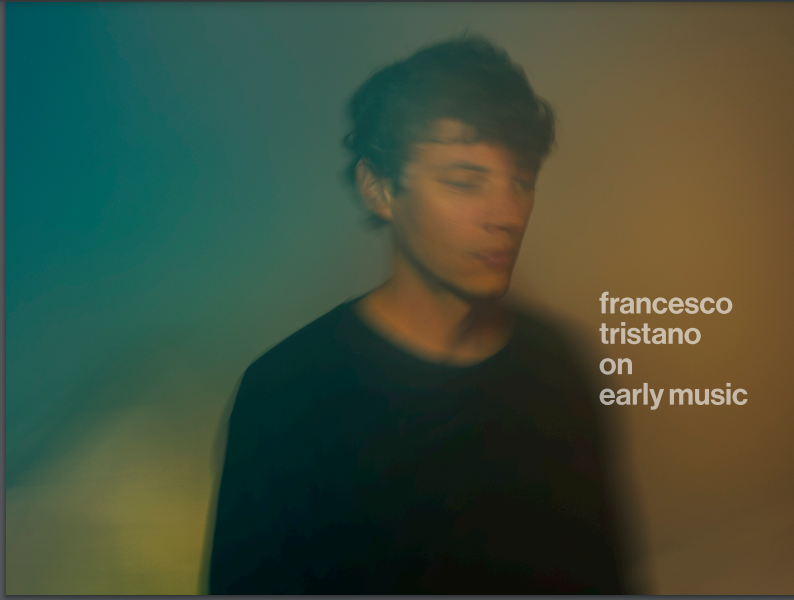
1. Ciacona seconda (Francesco Tristano Schlimé)

Ciacona seconda

Featured on: On early music (Francesco Tristano Schlimé)

Of course, the history of keyboard music does not start with Bach. For his record On early music, pianist and composer Francesco Tristano focuses on 16/17th century pioneers such as John Bull, Orlando Gibbons and Girolamo Frescobaldi.

Tristano alternates faithful renditions of these renaissance/baroque pieces with his own compositions that are inspired by both the general style and particular details of the early music that surrounds them. Ciacona seconda is a chaconne based on an inconspicuous fragment lifted from a Frescobaldi piece that’s looped into infinity.

Like others on this lists, this is a composition that telescopes various styles and periods of music: from early baroque to jazz and minimalism. The end result is a hypnotic display of virtuosity that grabs you from its very first notes and never lets go.

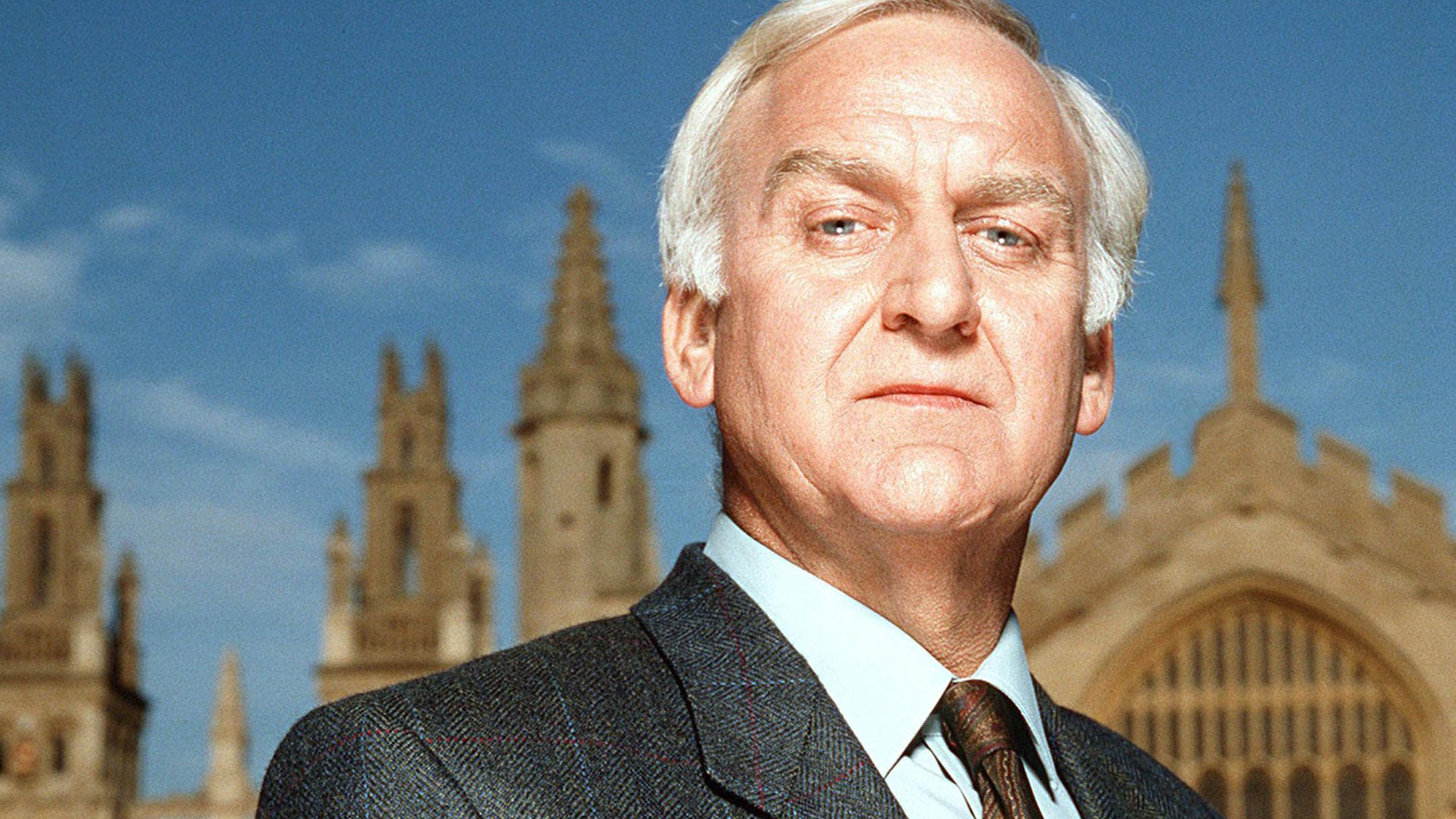
Inspector Morse: classical music’s uncommon ambassador

In my previous blog, I talked about how classical music was the model for many amazing film scores. But when classical music is itself the subject of tv or cinema, it’s often in a negative light. To indicate that a character is old-fashioned, stuffy, and possibly a psychopath.

Classical music fan
A typical fan of Bach’s Goldberg Variations

In short: the classical music lover on the small or big screen is seldomly someone with whom you’re supposed to sympathize. With one curious exception: Endeavour Morse.

Amiable snob

To be clear, inspector Morse is not a likeable guy – at least not in a traditional way. This late version of the British gentleman detective is from a humble background. But that doesn’t stop him from looking down on just about everyone around him. He’s exceptionally mean to his faithful subordinate, Sergeant Lewis, whom he scolds for his grammar, his lack of cultural capital, and occasionally even his wife.

Music inspector Morse
Chief Inspector Morse, looking down on you and everyone else.

Nevertheless, you can’t help rooting for the old grouch. Because of his sarcastic sense of humor and anti-establishment stance. And because he’s a dog that barks but never bites. There are even some surprisingly tender moments between him and Lewis.

Conservative taste

Through his refined tastes, Morse tries to distance himself from his unhappy childhood. He sculpted himself a persona out of poetry, museum visits, craft beers (long before those became fashionable) and – of course – classical music.

It’s no wonder that his preferences are on the conservative side. Lots of Mozart and Wagner. Scarcely something composed after 1900. The only time he stumbles into other musical worlds, he’s genuinely bewildered – like in the episode Cherubim & Seraphim, which is against the deafening backdrop of the rave scene. Hearing a familiar sample in one of the dance tracks, he shouts indignantly: “But that’s Allegri’s Miserere, conducted by Sir Adrian Boult!” – as if he’s made a crucial discovery in his investigation into the death of a young schoolgirl.

Spoiler alert!

Two episodes are inspired by a piece of classical music. In Masonic Mysteries, Morse is persecuted by a nemesis who taunts him with references to Mozart’s Magic Flute. But my favorite is Twilight of The Gods, where Morse investigates the shooting of a Welsh opera singer who’s famous for performing Brünnhilde in Wagner’s ring cycle.

The episode is littered with references to the famous opera tetralogy, including a subplot where it appears that the villain of the story murdered his son – just like Wotan killed Siegmund. There are also a lot of helicopters flying around, for no other reason I can think of but as a nod to the helicopter scene in Apocalypse Now, set to the Ride of the Valkyries. There’s even a burning Walhalla at the end, even if it’s a scale model.

Reluctant popularizer

Naturally, the success of the Inspector Morse series led to a stream of soundtrack CDs that sold like hot cakes. One wonders what the character himself would have thought about these ‘greatest hits’ CD boxes for sale at supermarket checkouts. I imagine a conversation such as this one:

  • Morse: “Lewis, but this is the sort of music l like, only cut up into less-than-four-minute fragments. Look, that’s the immolation scene from Götterdämmerung, conducted by Furtwängler!”
  • Lewis: “Ay Sir, it’s from a television series me wife likes!”
  • Morse: “Well, she would, wouldn’t she? As Frank Lloyd Wright said, Lewis, television is chewing gum for the eyes.”

Nevertheless, it’s possible that Inspector Morse did more for the popularity of classical music than many well-meaning but predictably failing educational initiative.

For decades, classical music tried to get rid of its reputation of pretentiousness in order to appeal to the masses. And when the masses do fall for it, it’s because the greatest snob of all listens to it in his vintage Jaguar Mark 2. Go figure.

Inspector Morse theme music

Finally, you can’t write about Inspector Morse and music without mentioning one of the most lasting legacies of the series: the theme music by Barrington Pheloung. It cleverly starts with the violins rhythmically spelling out MORSE in, well, morse code.

It’s still the most popular TV soundtrack ever written – leaving behind works by Khachaturian, Rossini and Prokofiev. Something that the inspector himself would certainly have frowned upon.

Time to hit the brakes on Beethoven? A dive into whole-beat metronome practice (WBMP)

In an earlier article, I mused about the many hours I’ve wasted watching music-related YouTube videos. This post is about the channel that stole the most of my time: Authentic Sound by Wim Winters – the closest thing the classical music universe has to a conspiracy theorist. At least if you believe some of the comments on his channel or on discussion boards such as these.

Whole-beat metronome practice discussion

So, what vile beliefs does Winters peddle on his channel? That Mozart was the leader of a band of child molesters? That Schumann was murdered by Brahms so he could steal his wife? That Beethoven was black, or Handel was gay?

Prepare to be disappointed …

Wim Winters is the inventor and tireless evangelist of the whole-beat metronome practice or WBMP: he’s convinced that music from the 18th and 19th centuries should be played slower than it usually is. And I mean waaaaaay slower. This is what he thinks Beethoven’s fifth symphony should sound like:

To understand where that comes from, we need to talk about metronome marks.

The mystery of Beethoven’s metronome

The metronome was invented in Beethoven’s time. In fact, he was one of the first of many composers who enthusiastically embraced it. They jumped at the chance to ensure ‘faithful’ executions of their music. Just indicate the number of beats per minutes at the top of the score and that’s the tempo everyone should stick to. What could be simpler?

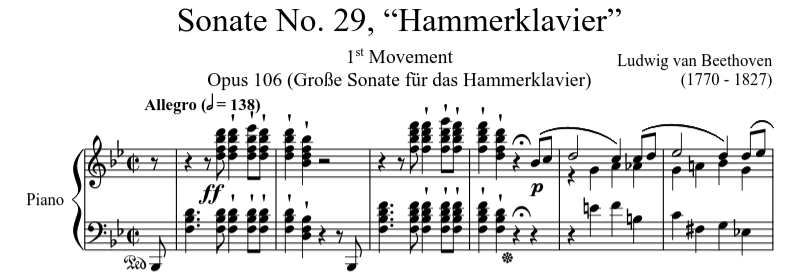
A lot, apparently. Because if we look at some of these metronome markings today, they seem unreasonably fast. In cases such as the marking Beethoven gave to his Hammerklavier sonata, it makes the music virtually unplayable.

Hammerklavier score
Not that it’s easy at any speed. That opening jump in the left hand is what keeps pianists awake at night.

It’s understandable that, for a long time, most performers pretended they didn’t see those metronome numbers and played the music considerably slower. That changed when the historically informed performance (HIP) movement picked up steam in the 1970s. True to their brand, the HIPsters dusted off those ‘authentic’ tempo indications and set out to prove they were not so absurd after all.

There’s a technical argument to back this up. Period instruments – such as baroque violins – make ‘shorter’ sounds that favor faster tempi. Pianofortes, moreover, have a lighter mechanical action than contemporary pianos, which makes them easier to play at high speeds.

And yet, that doesn’t conclusively solve the tempo problem. For one thing, the HIP performers, even if they play considerably faster, rarely reach the giga speeds that are proscribed for some works.

And it still seems strange that 19th century amateurs would have been expected to play at speeds that even present-day professionals struggle with. Consider that Chopin, who was not a show virtuoso like Liszt, would have been unable to play some of his own scores at the speeds he proscribed.

A very poor amateur pianist myself, I regularly play some of have J.S. Bach’s inventions – works that are explicitly meant for beginners. To play them at the metronome speeds mentioned in my score, is far beyond my reach. And even if I could pull it off, the result would sound ludicrous. The editor seems to be aware of this because they added a footnote:

“The metronomisations based on transition are intended for purposes of study, otherwise a more moderate time might be advisable throughout.”

Notwithstanding the abominable translation, it’s clear they think that the proscribed tempo would sound unmusical. So they advise you to slow down for actual performances. But what could be the point of making students play Bach at speeds that are not only unattainable, but also unmusical?

When I play those inventions, I regularly land at a tempo that’s about half as fast as the metronome mark. It’s feasible, and it sounds okay. And now we’re getting there …

From broken metronomes and stupid composers to the WBMP

Over the years, people have come up with several solutions to the metronome problem. A popular one is that there were a lot of broken metronomes around in the 19th century and that composers were too stupid to notice. A recent one even speculates (with the help of artificial intelligence no less!) that Beethoven wasn’t even smart enough to properly use a metronome.

More interesting is the idea of a psychological effect: music goes faster in the imagination than in reality, which compels composers to exaggerate their tempo indications. Perhaps, but that’s only valid if you assume that they never assess those spontaneous markings – at the keyboard for example.

And then there’s Wim Winters’ solution: whole-beat metronome practice (WBMP). In a nutshell: the first composers who encountered the metronome didn’t measure by the ticks of the mechanism but by the swing of the pendulum. As there are two ticks for every swing, their tempo indication needs to be doubled and the music would sound half as fast. Or double as slow.

Figuring out WBMP
Oh come on, it’s not rocket science!

Problems with the whole-beat metronome practice

Winters’ theory is certainly intriguing, and some of the examples he (cherry)picks certainly make you wonder. I recommend his series on the Bach inventions I mentioned earlier. Agree with him or not, but after that you cannot hold up the claim that there’s nothing fishy about 19th century metronome marks.

But there are also reasons for skepticism. For instance: wouldn’t you expect at least some, or even a lot of, direct historical evidence? Remember, Winters doesn’t only apply the WBMP to Beethoven and his pupils but also to composers like Chopin, Schubert, Schumann, … even all the way up to Max Reger. Why did no one, during those almost one hundred years, feel the need to express their amazement of the fact that the whole world had been using the metronome wrong?

Another reason to doubt the WMPB is the fact that if the music was played at a little less than half the speed, concerts would have taken almost twice as long. Haydn and Mozart symphonies would have easily gone on for more than 45 minutes – Beethoven symphonies regularly close to 80 minutes, the 9th even 2 hours. Unlikely, since contemporary critics complained about the outlandish length of some of Beethoven’s symphonies because they took more than 45 minutes. Although, it must be said that it’s very hard to determine what exactly was played during 19th-century concerts. Were all the movements of a symphony always performed? And what about the repeats within movements?

Finally, there’s the very obvious problem of some music in triple meters such as 3/8. Say that the metronome indication is 100/dotted quarter note, and you want to interpret it according to the WBMP. That means you would need to play mostly three notes against two ticks – or in constant polyrhythm with the metronome. It’s doable but far from comfortable. And it strengthens the first argument against WBMP: why did no one in the 19th century protest against such obvious (and easily avoidable) impracticalities?

And then, of course, there’s the cuckoo at the end of Beethoven 6th symphony.

The swinging of the pendulum

So, Winters’ WMPB theory is – though highly entertaining – very suspect. Nevertheless, he has a lot of committed believers. People who think that this is what Schubert’s Fantasy in f minor should sound like:

Crazy, right? But wait a minute: is it that much crazier than this interpretation of – again – Beethoven’s Hammerklaviersonate?

Impressive, sure. But to me, that tempo choice – though in the other direction – is almost as absurd. The difference is that the person making that choice is a highly respected pianist instead of a guy with a fringe YouTube channel. By the way, that’s still not as fast as Beethoven’s ‘single beat’ metronome mark. Here’s how that would sound.

When it comes to the speed of performed music before the recording era, we will always remain in the dark. What is certain, is that tempos have varied considerably over the years, owing to nothing more than fashion.

The HIP movement was fashion posing as science. Its anti-bourgeois, back-to-the-basics attitude paired well with the post-1960s cultural climate. Its love of speedy performances was partly a spill-over from pop and rock aesthetics. And it greatly benefited from the fact that recordings help to erase the lack of volume of period instruments. There’s nothing authentic about listening to a Beethoven symphony played by a supposedly 18th century orchestra and then turning it up to eleven.

And now, the pendulum is swinging back again. Look at the success of post-classical, neoclassical, indie classical or whatever you want to call it: slow, meditative music is all the rage. Wouldn’t it be perfectly natural if that influences the way we choose to interpret Beethoven or Chopin? We don’t need Winters’ creative historical research to back that up. But we certainly also don’t need the dogmas of the authenticity school to hold it back.

The revenge of the amateurs

It’s my hope that the relative success of Winters’ channel is an early indication of another swing of the pendulum: the death of classical music as a spectator sport. And the return of the amateur musician as the true hero of musical history.

The tagline of Winters’ channel used to be ‘They wrote music for you’. Whether that’s true of all music after Beethoven is another matter. But it’s certainly a fact that the success of the classical repertoire is mostly down to the incredible market for sheet music that existed during the 19th and early 20th century. Just about every middle-class house had a piano where the works of Beethoven, Schubert, Mendelssohn, Chopin, … were saved from oblivion. And it’s safe to guess that wasn’t done with the technical mastery of today’s maestros who practice sixty hours a week.

Playing an instrument – alone or together – is a gloriously absorbing activity that lets you experience music in a totally different way from merely consuming it. And yet, many of us learn to play an instrument when we’re young, and then give it up when we realize that ‘competence’ is all we can strive for. We seem to believe there’s no greater embarrassment than to become an imperfect version of the standard that is the professional musician.

It should be the other way around. The amateur musician is the standard, and the flawless, breakneck-speed virtuosos served to us by the music industry are circus freaks. They’re by no means out of place in the concert hall, but live music making should not be limited to payable venues.

Saying goodbye to unattainable tempo expectations is one of the easiest ways of greatly expanding the repertoire for amateur musicians. It’s no wonder that they flock to Winters’ YouTube channel. Or as a person on this forum so eloquently puts it:

They probably have the same problem as him: no technique but still wants to play.”

Exactly. And all the more power to them.

Want to keep up with my classical musings? Enter your email address and click subscribe.

Are these the best classical albums of 2021?

Probably not. But out of the ones I’ve heard, I’ve enjoyed these the most. Listen to this playlist for a selection of some favorite tracks.

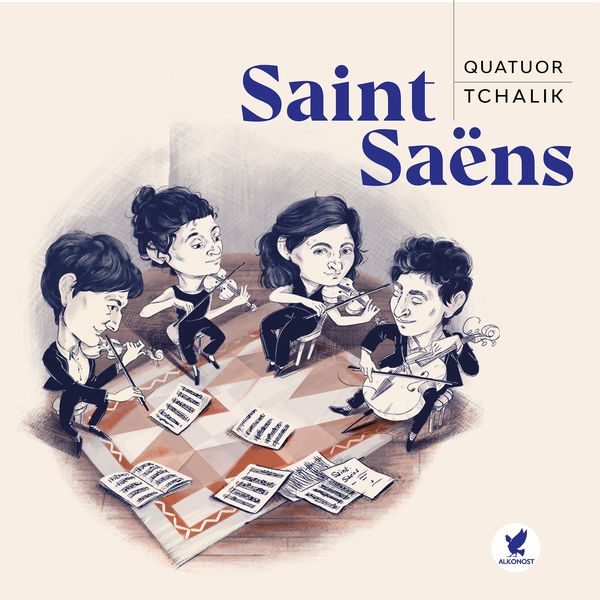
10. Saint-Saëns (Quatuor Tchalik)

Quatuor Tchalik Saint-Saëns

Not even the French made a big deal of the 100th anniversary of the death of Camille Saint-Saëns. But you can be sure of more exuberant festivities when his 200th birthday comes along in 2035. Because Camille’s star is rising. No longer the two-hit wonder of Carnaval des animaux and Danse macabre. No longer the old-fashioned opponent of progressives such as Debussy. But an exceptionally talented composer whose oeuvre is as bounteous as his beard.

Camille Saint-Saëns

These string quartets were written in 1899 and 1918. While the times were very much a-changin’ in the world of music, Saint-Saëns stuck to the principles he believed in: beautiful melodies, clear formal structures and neatly dosed pathos. All perfectly conveyed in this recording by Quatuor Tchalik.

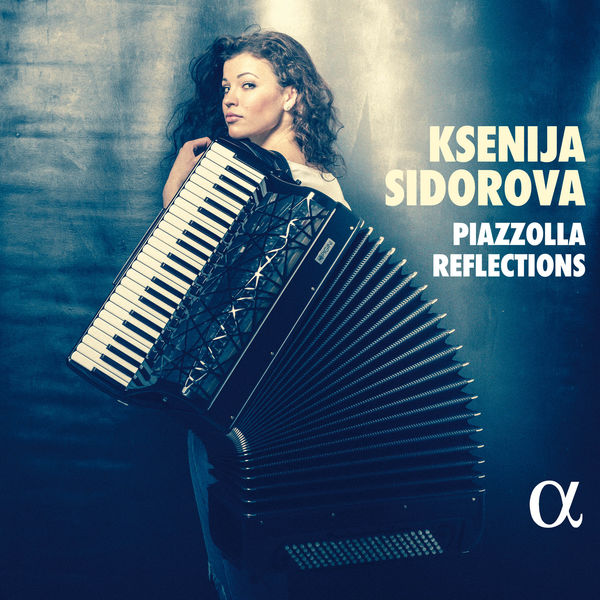
9. Piazzolla Reflections (Ksenija Sidorova)

Piazzolla Reflections (Ksenija Sidorova)

Another composer we celebrated this year is Astor Piazzolla – who was born in the year Saint-Saëns died. During Piazzolla’s lifetime, the opinions about his work diverged. For some, he betrayed the authenticity of the tango. For others, he didn’t deviate from it enough to be taken seriously as a ‘classical’ composer. As time goes by, such considerations lose more and more of their importance. Which is why Piazzolla’s star is also on the rise.

Be that as it may, I think all that tangoing can get a bit tedious – especially for a whole album. That’s why it’s nice that Sidorova pairs Piazzolla’s compositions with works from other composers that are often a bit more adventurous. And that she gives plenty of room for musicians from different backgrounds (jazz, world music) to shine.

But the absolute highlight is an exhilarating performance of Piazzolla’s Concerto for bandoneon and chamber orchestra. Inevitably, this is one of those compositions where he veers more to the ‘classical’ side of his musical persona. But then comes the build-up to the big climax at the end of the third movement: a shy shuffle gradually turns into an outburst of pure passion. And you immediately grasp the unique position this man occupies 20th century music – and far beyond.

8. Verklärte Nacht – German Orchestral Songs (Edward Gardner, BBC Symphony Orchestra)

Verklärte Nacht - German Orchestral Songs (Edward Gardner, BBC Symphony Orchestra)

A woman and a man take a stroll through a dark forest. She confesses the child she’s carrying is not his. He says that’s fine. That, in a nutshell, is the story of Verklärte Nacht (transfigured night), a poem by Richard Dehmel.

Verklärte Nacht was famously translated into music (for string sextet – no voice) by Arnold Schoenberg before he turned atonal on us. This recording pairs that version with another one (with mezzo-soprano, tenor and orchestra) by Oskar Fried. They’re both beautiful examples of late German romanticism – pulling out all the stops regarding orchestration and daring post-Wagnerian harmony. You can easily understand why Schoenberg thought there was nowhere left to go – even if you don’t like his solution. The songs by Erich Wolfgang Korngold that round off this album demonstrate there were different roads to take.

But the big surprise on this record is Fieber by Franz Léhar. Yes, the Franz Léhar who wrote operettas like Die lustige witwe and was Hitler’s favorite composer (Adolf claimed it was Wagner, but Léhar was what he actually listened to).

Léhar’s contribution might be less sophisticated than those of Fried, Schoenberg and Korngold. It’s essentially a tearjerker about a dying soldier during the first world war (written in 1915). But that ending – “Herr Stabarzt, der Kadett vom Bette acht is tot” – sends shivers down my spine every time I hear it. I know I’m being emotionally manipulated but can’t resist reveling in it.

7. Otaka: Piano Concerto & Symphony “Au-delà du temps” (Live) (Junichi Hirokami, Japan Philarmonic Orchestra)

Otaka: Piano Concerto & Symphony "Au-delà du temps" (Live) (Junichi Hirokami, Japan Philarmonic Orchestra)

Atsutada Otaka died 100 years after the death of Saint-Saens and the birth of Piazzolla. If you’ve been paying attention, you realize that means he passed away this year.

Just like Saint-Saëns and Piazzolla, he studied in Paris. And that’s about all I can tell you – since the non-Japanese part of the internet I rely on for my musicological research doesn’t have a lot to say about him.

Luckily, his music speaks loud and clear. Especially the piano concerto is a tremendous example of the rhythmic vitality that characterizes so much of the best 20th and 21st century music. It mainly reminds me of Stravinsky, Gershwin and Glass. But that might be because I don’t know enough about Japanese music. This recording powerfully demonstrates why fixing that should be one of my new year’s resolutions.

6. Mozart Momentum – 1785 (Leif Ove Andsnes, Mahler Chamber Orchestra)

Mozart Momentum – 1785 (Leif Ove Andsnes, Mahler Chamber Orchestra)

This album consists of compositions:

  • written by Wolfgang Amadeus Mozart …
  • during his most productive year …
  • performed by one of the greatest pianists of our time …
  • who also turns out be a wonderful conductor.

And that’s all I have to (need to) say about it.

5. En Albion: Medieval Polyphony in England (Paul Van Nevel, Huelgas Ensemble)

En Albion: Medieval Polyphony in England (Paul Van Nevel, Huelgas Ensemble)

2021 was also the year of The Beatles: Get Back – a valuable addition to the already mythic story about four British lads who changed the history of music. A similar thing happened about 600 years earlier, when the works of – largely unnamed – English composers became all the rage on the continent and catalyzed the transition from the musical Middle Ages to the Renaissance.

Commentators from that time praised English music for its ‘sweet sound’. British composers achieved it through an increased used of sixths and thirds instead of fifths and octaves. And by taking care that simultaneous notes always sounded good together – in contrast to medieval composers who concentrated on nice chords on the beginnings and endings of phrases and didn’t much care about what happened in between.

This panconsonant style was then picked up on the continent by the first generation of Renaissance composers and would be of fundamental importance for the development of Western music – from Beethoven to, yes, The Beatles. But especially during the Renaissance, the ever-greater insistence on frictionless harmony meant that music also became a lot more boring. It lost all the edge that medieval music had.

From that respect, this collection of 14th century English music represents a unique balance between medieval edginess and Renaissance sophistication. It’s performed by the Huelgas ensemble, one of the pioneering and still most respected ensembles of early music. I generally find them a bit too tame and reverent when performing renaissance music. But in this recording, Paul Van Nevel takes a looser approach – playing around with voice arrangements to build dynamic structures and adding some unusual embellishments.

4. And Love Said… (Jodie Devos, Nicolas Krüger)

And Love Said... (Jodie Devos, Nicolas Krüger)

Did the English produce any other music of merit between the 1300s and the 1960s? Some might argue that they didn’t, especially since their one ‘big name’ was a German import. They would, of course be wrong – as Jodie Devos demonstrates through this collection of wonderful songs by – mainly – English composers from the early twentieth century such as Ivor Gurney, Benjamin Britten and William Walton.

Most of all, this record distinguishes itself by containing the most beautiful note of 2021. It’s at 2:13 of track 12 – Let the florid music praise by Benjamin Britten. On ‘hour’, Devos produces a tone (I think it’s a blue note) that threatens to snap all your heartstrings at once.

Extra points for the cover of Freddie Mercury’s You take my breath away. It proves that pop interpretations by classical musicians don’t need to be cringeworthy.

3. Schütz: Musicalische Exequien. German funeral music of the 17th century (Johannes Strobl, Voces Suaves)

3. Schütz: Musicalische Exequien. German funeral music of the 17th century (Johannes Strobl, Voces Suaves)

One of the things we all know about J.S. Bach is that he made a synthesis of all the music that preceded him. Maybe that’s why I never paid much attention to 17th century music, thinking I could just as well listen exclusively to Bach instead.

Boy, was I wrong. Since I dived into the works of people like Purcell, Rameau, Biber, Schütz and Schmelzer, I realized there’s yet another treasure trove of music that I will never be able to fully unpack. This collection of German funeral music is full of the harmonic eccentricities that were ironed out by the time Bach and Handel wrote their choral masterpieces.

Schütz is the biggest name here, but I was especially blown away by the first track: Ich will schweigen by Johann Hermann Schein. It’s extraordinary to think that such a masterpiece was ‘Gebrauchsmusik’ – meant to be played only once and then, well, taken to the grave.

2. Summertime (Isata Kenneh-Mason)

Summertime (Isata Kenneh-Mason)

2021 was the year when identity politics – or wokeism if you like – fully entered the world of classical music. That leads to toxic debates such as the imaginary cancellation of Beethoven. But also to a long overdue reevaluation of composers from disadvantaged groups such as women and people of color.

From that last category, I especially like Samuel Coleridge-Taylor, a turn-of-the-century English composer who was actually quite popular during his lifetime – mostly for his oratorio Song of Hiawatha. Maybe his ‘fall from grace’ has more to do with his musical style than the color of his skin. He composed in the tradition of Dvorak and Brahms, without advancing it very much. But isn’t ‘progressism’ another noxious ideology that the classical music world should leave behind?

Some of Coleridge-Taylor’s biggest fans came from the African-American community. When he learned of the sorrows of his brothers and sisters across the ocean – and discovered their music – he was extremely touched. His version of the spiritual Sometimes I feel like a motherless child, so soulfully performed by Kenneh-Mason, is a heartbreaking testament to that.

That track alone would be enough to put this record in my top ten. What launches it to the second spot is the inclusion of an equally impressive – yet completely different – work: Samuel Barber’s piano sonata. This is an extremely complex work that even uses – yikes! – some 12-tone rows. And nevertheless I was completely sold after no more than two listens. Remarkable!

1. Eilífur (Viktor Orri Árnason)

Eilífur (Viktor Orri Árnason)

If you care about making classical music less white, Iceland probably isn’t the best place to look. But it’s undeniable that there’s something in the water of this volcano-ridden Viking hide-out that inspires musicians who effortlessly skate between pop, post-classical and avant-garde.

Not all of that music is to my taste. I love Björk, but never understood the attraction of Sigur Rós or Jóhann Jóhannsson. ‘Atmospheric’ is the word that’s most often used to describe their music. And while that makes for a perfect aural backdrop during sauna sessions, my attention quickly starts to drift away from the music. Which – I know – is probably exactly the point.

But once Árnason grabbed my attention, he never let go. He constantly plays around with his imaginary orchestra (different instrumental groups and voices were recorded during different sessions) to mix up the texture. Neoromantic strings and winds – sounding like Bruckner from under 15 meters of ice – are combined with an eerie avant-garde choir. In The thread a solo viola plays the saddest motif you can imagine. In The vision an ensemble of woodwinds weaves a brittle contrapuntal structure. There are ominous drones, syrupy fragments, impressive crescendos and sudden silences … Always something happening and yet beneath it all is a constant all-pervasive quality, a … – what should I call it – atmosphere!

Its booklet reveals that Eilífur – which means eternal – is a concept album. It conveys what life would be like if (when?) we all live forever. To me, it sounds like a state of limbo where we oscillate between hope and fear. A fitting tribute to 2021.

Want to keep up with my classical musings? Enter your email address and click subscribe.

Beethoven and AI: the battle of the superhumans

Did you hear? They finally finished Beethoven’s tenth symphony using artificial intelligence! Pretty cool, right?

Well, no. That spectacular news story misrepresents Beethoven’s tenth and what AI can do for music.

Let’s start with the easy part.

Beethoven’s tenth is not ‘unfinished’, it simply doesn’t exist

While music history’s most famous unfinished symphony – Schubert’s eighth – is pretty much complete, Beethoven’s tenth was never begun. Even though the promo text of the AI project subtly tries to convince you otherwise:

“All he left behind were some musical sketches. Ever since then, Beethoven fans and musicologists have puzzled and lamented over what could have been. His notes teased at some magnificent reward, albeit one that seemed forever out of reach.”

Really? Click here to listen to those sketches. Then let me know how they make you feel. Lamenting about unfulfilled promises? Or just ‘Meh’?

Blocks of marble
“It makes me crazy that we will never know how Michelangelo would have finished these.”

No, Beethoven fans and musicologists have not been madly pulling out their hair about what could have been. Most of them couldn’t care less. One of them already claimed to ‘finish’ the tenth more than thirty years ago. Which is to say: he wrote a symphony in Beethoven’s style using that handful of melodies. Because that’s all you can reasonably do. Unless, apparently, you can “harness the power of AI”.

The contribution of AI to the ‘finishing’ of the ninth is probably minimal

That aforementioned promo text is extremely vague about how they used AI to ‘complete’ Beethoven’s tenth symphony. So all I can do is make an educated guess – and I’m not an educated data scientist. Fortunately, this guy is, and he does a nice job of explaining how it works for Bach chorales, so I’ll start from there.

Up until now, those AI-generated Bach chorales are the most famous examples of computer compositions. They’re impressive, but the project is also a bit of a scam. The name ‘Bach’ inflates the implied accomplishment, while the key word is actually ‘chorale’.

A chorale is a four-voice setting of a Lutheran hymn. Here’s a classic example:

Beautiful. Yet also, in many ways, simple:

  • The main melody (usually in the top voice) is a given so doesn’t need to be composed.
  • The instrumentation – four voices and basso continuo – is fixed.
  • All voices have a more or less equal number of notes to sing and move together in the same rhythm.
  • It lasts no longer than a few minutes.

When you look at it from the standpoint of a computer, those are many fewer variables that it needs to worry about then when it’s asked to compose a, well, let’s say, … Beethoven symphony.

Nevertheless, the AI-composed chorales are extraordinary. How does it work? Not by music-savvy programmers – or IT-savvy musicologists – who write all the rules, that would take decades. It’s achieved by a process called deep learning where the computer kind of writes its own code. It works like this:

  1. The computer is given an input, such as a few notes of a melody of a chorale.
  2. The computer is asked to guess certain parameters, such as what the next note will be or what the underlying voices are.
  3. If the computer is ‘right’ – makes the same choice as Bach – the algorithm is slightly adjusted accordingly.
  4. After many, many trials and errors, the algorithm becomes so refined that it always guesses right or at least almost right.
  5. You can now use it to write new stuff in the style of Bach.

Number 4 is important here: you need a lot of input to train a deep learning system. In this case, there are about 350 Bach chorales, which our data scientist source calls “an extremely small dataset”.

Compare that to a measly nine Beethoven symphonies and you’ll probably agree that something’s not right here. The promo text of the project mentions that they used “completed compositions from Beethoven’s entire body of work”, but that’s not very impressive when you realize that a lot of that isn’t even orchestral, and that Beethoven significantly changed important aspects of his style during his lifetime. Is the AI offering us the tenth symphony as it would have been composed by the 1827 Beethoven or by the ‘average’ Beethoven?

For all those reasons, I find it hard to believe that this tenth symphony was completed by artificial intelligence. I suspect that a lot of work was done by the composers and musicologists involved. So much that they could have done it faster and cheaper on their own. But then of course, they wouldn’t have made the news.

Why is that idea so easy to sell? Why do we instinctively believe that artificial intelligence can do a better job of imitating Beethoven than a 21st-century composer? This quote from the CEO of Playform AI, the company that did the AI part of this project, speaks volumes:

“At every point, Beethoven’s genius loomed, challenging us to do better.”

For a man who probably uniwheels to work and says ‘engaging in ideation’ when he means ‘thinking’, that’s a statement with surprising 19th century overtones. Didn’t we put behind us this idea of ‘great men’ who lived in a ‘golden age’ and now hover like demigods over us mere mortals? Apparently not. A lot of us still believe that present-day composers (F/M) are no match for Beethoven. And that only our new deity can come to the rescue: the Almighty Algorithm.

AI and music: servant rather than master

All this doesn’t mean there isn’t a case for using AI in music making. In the end, artificial intelligence is no different than a harpsichord, a synthesizer or a laptop – a tool that can also inspire.

Instead of using AI to come up with music that we can just as well imagine ourselves, why not take advantage of its ability to make connections that we would never come up with, to think of completely weird, but sometimes oddly beautiful sounds? Please decide for yourself whether this piece of music falls under that definition:

Like it or not, this is what a computer composes when humans don’t tamper with it. Its creator Holly Herndon said this about it:

“I find something hopeful about the roughness of this piece of music. Amidst a lot of misleading AI hype, it communicates something honest about the state of this technology; it is still a baby.”

Amen to that.

Want to keep up with my classical musings? Enter your email address and click subscribe.

More about Beethoven